
Be a writer
Snow still looms in the Maryland weather forecast as I type this, but thoughts here in the American Society for Biochemistry and Molecular Biology office are turned to the sunny flip-flop weather of Orlando. Preparations are well underway for the annual meeting and likely to consume us for the next month or so.
Here at the magazine, we’re focused on providing you with lots of meeting-related articles and useful information ( check out our speakers’ profiles) in this issue and the next, but, as always, I’m looking beyond the horizon, toward late spring and summer. These pages won’t fill themselves.
Here at ASBMB Today, we have a wonderful crew of volunteer writers who cover news of cutting-edge research and the scientists who make it happen (all the annual meeting profiles in this issue were written by volunteers). And we have staff writers who provide our deep-dive feature stories. Their contributions might be considered the brains of this publication.
But you, our members, provide much of its heart and soul. (Don’t poke this analogy too hard, please.)
I like to think that this is a members’ magazine in the best sense of the term. It rightly belongs to the members, and it’s a place where you can share your stories and opinions. It’s also a great venue for civil discourse and debate. Consider this your invitation.
We have two essay series running this year: “Night shift” and “What I wish people understood about ___.” In this issue, I’ve taken on the second of these topics (even though my bumper sticker reads, “I’d rather be editing”) in the hopes that you’ll feel encouraged to pick up a pen or flip open your laptop and pour out a story from your experience. Deadline (rolling): first Monday of the month, through October.
We have an education and careers issue scheduled for August. If you’ve faced and surmounted professional challenges, we want you to share what you’ve learned. If you’ve had failures and setbacks, we want, perhaps even more, to read about those too. Deadline: June 3.
Did you read our wellness issue in January? It was absolutely chock-full of inspiring stories and good advice from (you guessed it) members. This is such a huge topic for the science community that we’re tentatively planning another such issue for January 2020. Do you have a story to tell about how you take care of yourself or about obstacles to staying well? You know what I want you to do. Deadline: TBD.
So many great topics swirl around this community. You have opinions. You have stories. You have ideas for making things better. Deadline: the sooner the better.
And you have an editor (me). Send me your words, and I’ll work with you to make them say what you want to say in the clearest, most elegant, most honest way possible.
I look forward to reading you.
Enjoy reading ASBMB Today?
Become a member to receive the print edition four times a year and the digital edition monthly.
Learn moreGet the latest from ASBMB Today
Enter your email address, and we’ll send you a weekly email with recent articles, interviews and more.
Latest in Opinions
Opinions highlights or most popular articles
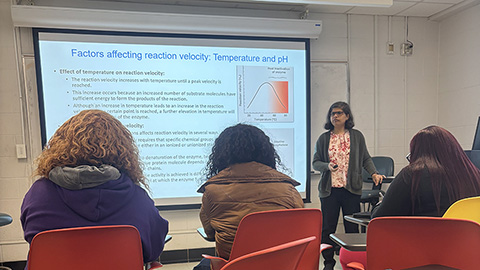
When AI replaces confidence in the classroom
After students relied on AI for writing assignments, one molecular biology instructor reframed the issue as a confidence gap and implemented a collaborative assignment to foster scientific reasoning and authentic engagement at an HBCU.
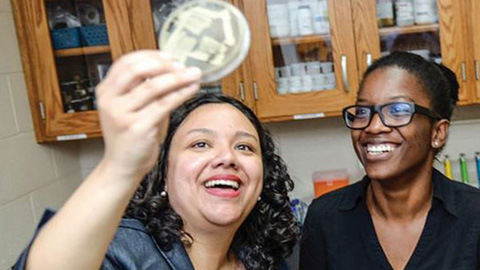
“Hi, profe!” How I learned to connect with my students
After critical course evaluations, a biochemistry instructor reflects on how sharing her story and building relationships transformed her classroom, helping students feel seen, welcomed and more connected to science.
Teaching an evolving field: Lessons from mosquitos
Professor explores how adapting teaching to new technologies and student needs can deepen learning.
Flipping the script to build student confidence through empathy
Educator reexamines her approach to an introductory biochemistry course, showing how affirmation and intentional support reshaped student engagement and persistence.
When biochemistry stopped being scary
Professor challenges the idea that biochemistry must feel abstract by designing hands-on models and games that turn fear into curiosity, transforming classrooms across Pakistan into spaces for experimentation and shared discovery.
Listening first: The moment that reshaped my teaching
Educator recounts how a single student comment reshaped her teaching, leading her to replace lectures with question-driven, collaborative learning and rethink AI as a tool for deeper engagement and understanding.