

From curiosity to conversation: My first science café
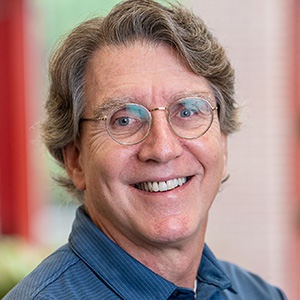
Why was I so nervous? I’d spoken in hundreds of seminars and classes, in front of large audiences, and even politicians and lawmakers. So, why was I clammy and pacing?
Admittedly, I’d never explained my research to a crowd of nonscientists relaxing over food and drink at a local tavern. Was I afraid the audience might oppose genetically modified organisms? Or question the environmental risks of recombinant DNA?
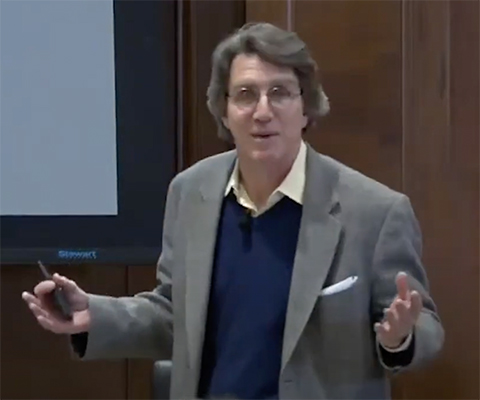
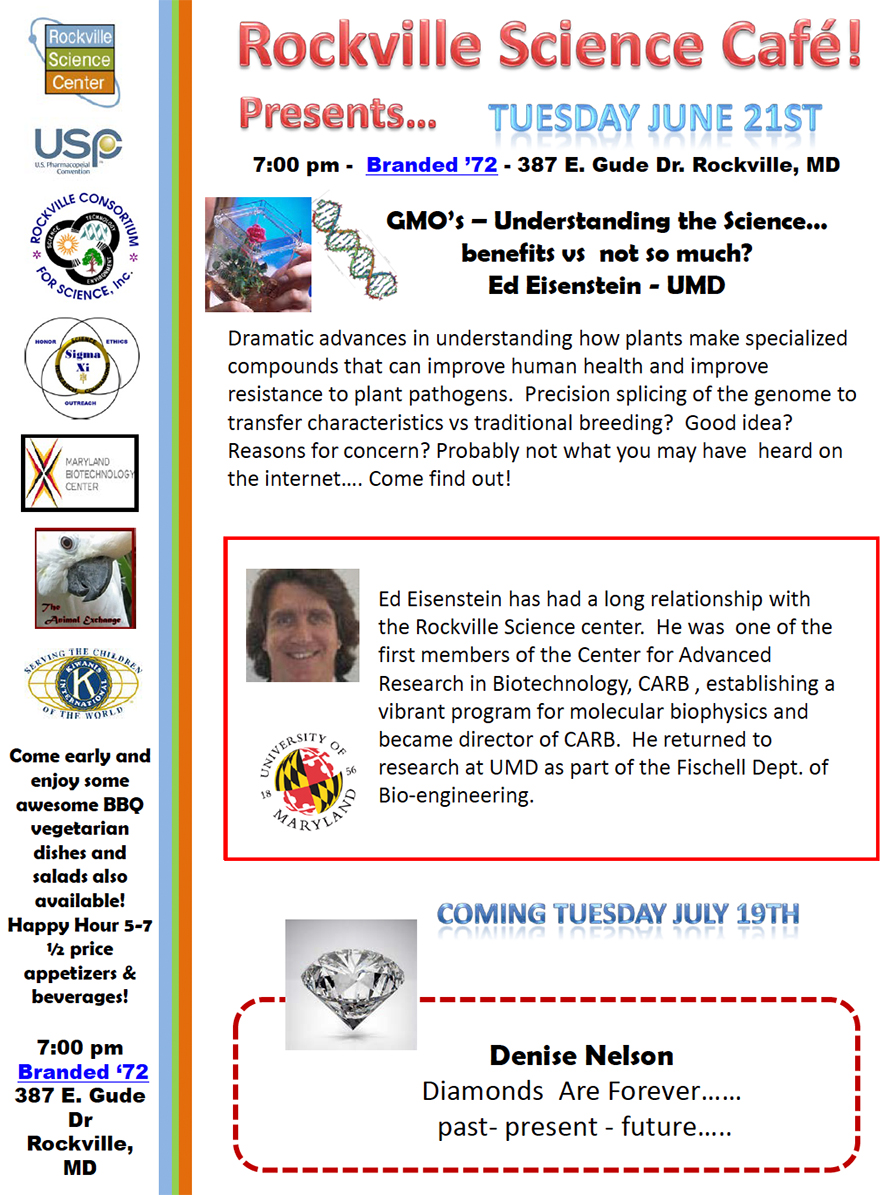
It was 2016 and I was hosting one of the first science cafés for the Rockville Science Center, a nonprofit I’d established with a group of interested citizens and a local chapter of the research honor society, Sigma Xi.
With biotechnology booming and many major government labs nearby, we thought Rockville, Maryland was the ideal location for a center focused on explaining science to the public. We wanted to put on science presentations in the style of Ben Wiehe.
Wiehe now heads the Science Festival Alliance, but back in the day, he worked at Boston’s public TV station and pioneered the concept of science cafés. He used to walk into Boston bars and start talking about all things science. No slides, no flip charts, just conversation. And that’s what we wanted to do: share science in bars, restaurants, community centers — anywhere.
I was the inaugural leader, giving the first presentation to a packed crowd.
As soon as I started chatting about the research in our university biotechnology institute, I realized my anxiety was unfounded. Everyone paid rapt attention. Although my presentation lasted only 10 minutes, the audience questions kept me under the spotlight for over an hour.
The audience was more receptive to technology than opposed. It was really quite inspiring. A few questions pertained to translating basic science into cures and therapies: How long does it take? How much does it cost? How complicated is it? Parents asked how their children could learn how to do science that makes a difference. Some asked what the students we trained went on to do. And a couple of people asked about risk, compliance with regulations, and safety. But really not too many.
Afterward, more than a few people offered to buy me a drink to continue the conversation.
That science café allowed me to connect with the public and communicate all types of science. I’ve done more than a handful since, but I’ll never forget my first. You should host one too; it’s a great experience — for everyone.
Enjoy reading ASBMB Today?
Become a member to receive the print edition four times a year and the digital edition monthly.
Learn moreGet the latest from ASBMB Today
Enter your email address, and we’ll send you a weekly email with recent articles, interviews and more.
Latest in Opinions
Opinions highlights or most popular articles
Learning can be fun: Gaming anatomy and physiology
Instructors explore how gamification and active learning transform student engagement and retention. They convey how emotion, interaction and design can make even rigorous subjects more effective and memorable.
Mentorship and uncertainty: Lessons from Telemachus
A biochemistry educator reflects on mentorship through the Greek story of Telemachus, showing how embracing uncertainty, failure and curiosity can transform teaching.
Embracing the twists and turns along the educator pathway
A biochemistry educator reflects on the challenges of early faculty life, describing how evidence-based teaching, cross-disciplinary collaboration and classroom challenges shaped her growth.
Redesigning with students in mind
Assistant professor reflects on how the shift to online teaching revealed gaps in points-based grading and led to a redesign centered on transparency and student growth.
Teaching beyond information transfer
Educator reflects on moving beyond lectures to create a biochemistry classroom centered on engagement, transparency and student ownership, showing how small shifts like “student hours” and active learning can transform understanding.
Mayday! Lessons from cellular dysfunction and group work dynamics
An upper-level biology course revealed that strong science doesn’t guarantee strong teamwork. One instructor shares how failed group dynamics reshaped their approach, leading to more structured, collaborative and effective student learning.