
An open letter to the ASBMB executive director search committee
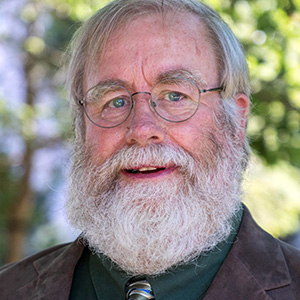
As the American Society for Biochemistry and Molecular Biology seeks to hire a new executive director by the end of this year, I’m writing today to share my thoughts on the process.
I have been an ASBMB member since 1986. Since 2007, I have continually served the society in a variety of roles. I have chaired the Education and Professional Development Committee and, later, the Membership Committee. I served on the Journal of Biological Chemistry editorial board from 2010 to 2015. I worked on the accreditation program and with members of the Maximizing Access Committee (then the Minority Affairs Committee) on Hands-on Opportunities to Promote Engagement in Sciences, or HOPES, a National Science Foundation–funded K–12 science outreach program. I have had the pleasure of working closely with both Barbara Gordon and Steve Miller. As a faculty member and former department head, I have extensive experience with a wide range of leadership styles.
I care deeply about the ASBMB. Having chaired or sat on many university search committees looking to fill administrative positions, I am all too familiar with the inevitable assertion, generally from an administrator, that executive experience is the indispensable qualification by which to judge applicants — that, first and foremost, we need someone who is a master of the spreadsheet.
I beg to disagree.
As you know, our society is at a crossroads. The steady revenue stream provided by subscriptions to our journals has evaporated with the decision to move to open access. In my opinion, there is no viable steady-state model for ASBMB. We cannot go on as we are. Either we will become THE society of biochemistry and molecular biology writ large, or we will slowly fade away.
The times demand an executive director who possesses a big-picture vision, an appreciation for the breadth and diversity of our society, an ability to connect with the many members whose volunteerism makes possible so much of what the ASBMB is and does, and the boldness to dare.
As you sift through the applications, especially each applicant's vision statement and external letters of recommendation, look for signs of altruism, vision and an investment mentality rather than the extent of administrative experience and managerial acumen. For example, does a candidate effortlessly credit others, writing or speaking in terms of teams, communities and groups, or do they constantly talk in terms of me, my and I? Do they think and act incrementally or in transformative terms? Do they acknowledge their shortcomings while exhibiting a steady internal compass? Don't be afraid to embrace someone with the "right stuff," even though they may seem relatively young and inexperienced.
Speaking as a former department head and committee chair, I believe that administrative experience is overrated. Administrative skills can be learned, and lack of experience can be addressed through effective partnership with staff. Imagination, vision, empathy and conviction cannot acquired from a book or a workshop.
We need to be willing to dare if the ASBMB is to grow and diversify. And that’s what it must do to match the global impact of our discipline and the needs of our members, both present and future.
Enjoy reading ASBMB Today?
Become a member to receive the print edition four times a year and the digital edition monthly.
Learn moreGet the latest from ASBMB Today
Enter your email address, and we’ll send you a weekly email with recent articles, interviews and more.
Latest in Opinions
Opinions highlights or most popular articles
Learning can be fun: Gaming anatomy and physiology
Instructors explore how gamification and active learning transform student engagement and retention. They convey how emotion, interaction and design can make even rigorous subjects more effective and memorable.

Mentorship and uncertainty: Lessons from Telemachus
A biochemistry educator reflects on mentorship through the Greek story of Telemachus, showing how embracing uncertainty, failure and curiosity can transform teaching.
Embracing the twists and turns along the educator pathway
A biochemistry educator reflects on the challenges of early faculty life, describing how evidence-based teaching, cross-disciplinary collaboration and classroom challenges shaped her growth.
Redesigning with students in mind
Assistant professor reflects on how the shift to online teaching revealed gaps in points-based grading and led to a redesign centered on transparency and student growth.
Teaching beyond information transfer
Educator reflects on moving beyond lectures to create a biochemistry classroom centered on engagement, transparency and student ownership, showing how small shifts like “student hours” and active learning can transform understanding.
Mayday! Lessons from cellular dysfunction and group work dynamics
An upper-level biology course revealed that strong science doesn’t guarantee strong teamwork. One instructor shares how failed group dynamics reshaped their approach, leading to more structured, collaborative and effective student learning.