
Hidden talents
It gives me great pleasure to learn about the unexpected talents of my coworkers.
Years ago, I worked with an editor, a nondescript, slightly goofy, by-the-numbers kind of guy. I didn’t think much about his life outside the office until I learned that he was a serious square dancer. Every weekend, he and his wife dressed in matching outfits (brightly colored vest for him, lots of petticoats for her) and drove to an Elks lodge or church hall to do-si-do and promenade with a bunch of similarly inclined couples. It completely changed my image of him.
Now that we’re mostly working from home, we don’t have as many of those social gabfest moments when we can learn which of our esteemed associates are gourmet cooks, equestrians, mountaineers, novelists or chess masters. And that’s a real shame. It’s such fun to imagine the person who, in my experience, mainly stares at a computer screen, out feeding the poultry in a backyard chicken coop or teaching a Zumba class.
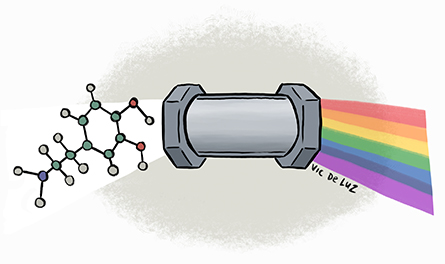
That’s why I was so delighted to see these drawings.
Vic De Luz has worked in the American Society for Biochemistry and Molecular Biology’s publications department for more than two years, most recently as executive assistant. Back when we were in the office, I knew Vic mostly as a nice person to chat with while waiting for coffee to brew. Our work didn’t intersect very often, so I was completely taken aback when I saw this artwork for the Journal of Biological Chemistry’s Methods Madness campaign. It’s witty and fun, and it brings our first-ever science and art issue of ASBMB Today right back to the heart of the society.
Enjoy reading ASBMB Today?
Become a member to receive the print edition four times a year and the digital edition monthly.
Learn moreGet the latest from ASBMB Today
Enter your email address, and we’ll send you a weekly email with recent articles, interviews and more.
Latest in Opinions
Opinions highlights or most popular articles
Learning can be fun: Gaming anatomy and physiology
Instructors explore how gamification and active learning transform student engagement and retention. They convey how emotion, interaction and design can make even rigorous subjects more effective and memorable.
Mentorship and uncertainty: Lessons from Telemachus
A biochemistry educator reflects on mentorship through the Greek story of Telemachus, showing how embracing uncertainty, failure and curiosity can transform teaching.
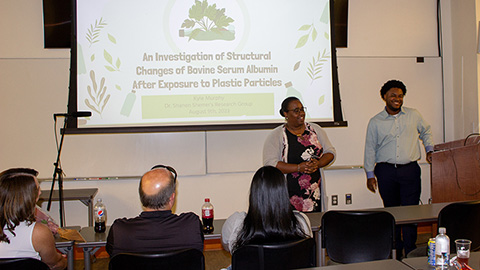
Embracing the twists and turns along the educator pathway
A biochemistry educator reflects on the challenges of early faculty life, describing how evidence-based teaching, cross-disciplinary collaboration and classroom challenges shaped her growth.
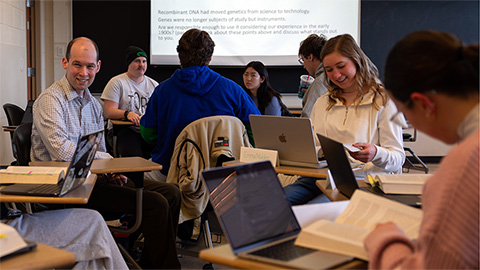
Redesigning with students in mind
Assistant professor reflects on how the shift to online teaching revealed gaps in points-based grading and led to a redesign centered on transparency and student growth.
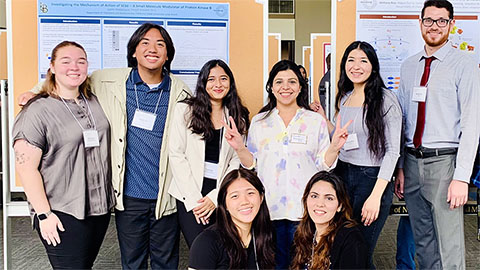
Teaching beyond information transfer
Educator reflects on moving beyond lectures to create a biochemistry classroom centered on engagement, transparency and student ownership, showing how small shifts like “student hours” and active learning can transform understanding.
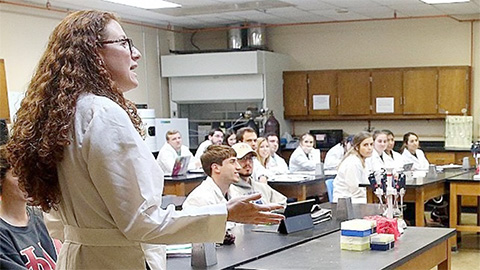
Mayday! Lessons from cellular dysfunction and group work dynamics
An upper-level biology course revealed that strong science doesn’t guarantee strong teamwork. One instructor shares how failed group dynamics reshaped their approach, leading to more structured, collaborative and effective student learning.