
Science is all about connections, conferences and collaborations
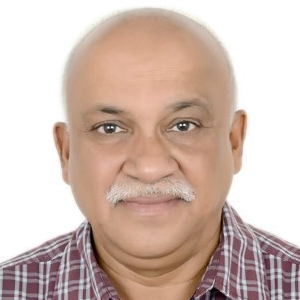
My first 10 years of research as an independent investigator (1989-1999) largely were focused on restriction-modification enzymes as model systems to understand DNA–protein interactions. Just at the turn of the century (1999), I decided that I would study DNA repair proteins to understand how some proteins recognize damaged DNA.
As luck would have it, I secured a Union for International Cancer Control Yamagiwa–Yoshida cancer fellowship to spend three months in Paul Modrich’s laboratory at Duke University to learn to make DNA mismatch substrates and DNA mismatch repair assays. Incidentally, the preparation of DNA mismatch repair substrates takes about two to three weeks.
I brought back some of these substrates to my laboratory in Bangalore, and we set out to identify and characterize the mismatch repair proteins in the bacterium Haemophilus influenzae. Nimesh Joseph, a graduate student who had just joined my lab, cloned, overexpressed and purified MutS, MutL and MutH proteins and did some biochemical characterization.
Around this time, a number of research groups in the U.S. and Europe had done some wonderful work with the E.coli mismatch repair pathway and its proteins. Our work with H. influenzae proteins showed marginal differences but nothing spectacular. I decided to present some of our results at a Keystone Symposia on Molecular and Cellular Biology meeting on bacterial chromosomes.
I flew from Bangalore via Hong Kong and San Francisco to New Mexico — more than 20 hours of flying time. I landed at Albuquerque International Sunport on Feb. 7, 2004, to catch a limo that would take me to Santa Fe (via I-25 North) where the meeting was being held. There were five other scientists in the limo, and as we got to talking for the next 90 minutes or so, all signs of jet lag vanished. Sitting next to me was Wei Yang from the National Institutes of Health, Bethesda, whom I had never met. We talked briefly about our research interests.
Wei Yang was giving a keynote lecture the next day, and it was only then that I realized she was a crystallographer par excellence who had solved a number of structures of proteins involved in replication, transcription and repair. I remember asking her a question about strand discrimination signal in mammalian DNA mismatch repair.
That afternoon I presented our work on the H. influenzae DNA mismatch repair pathway. Several people were curious to find out what was new about H. influenzae DNA mismatch repair as opposed to the wealth of information that already was known about mismatch repair proteins in the model organism E. coli. In fact, the 3D structures of some E. coli mismatch proteins already had been determined.
Toward the end of the session, Wei Yang stopped by and said she was curious to know if the H. influenzae mismatch repair proteins behaved differently from the E. coli ones. She added that scientists had problems crystallizing E. coli mismatch proteins when they were bound to DNA and asked me if she and her colleagues at the NIH could try cocrystallizing Mut H protein from H. influenzae and DNA containing a mismatch. I agreed, and I guess that was the starting point of our collaboration.
I came back to Bangalore after the Santa Fe meeting and sent the H. influenzae MutS overexpressing clone to Wei Yang. Her laboratory purified the protein, and in 20-odd days, they had set up crystallization trays and soon obtained beautiful crystals. Remember, these were DNA-bound MutH crystals — earlier attempts to obtain cocrystals with the E. coli protein had been largely unsuccessful. Even more thrilling was that these cocrystals were diffracting, and therefore acquisition of X-ray data was quick.
The structure of the MutH–DNA complex was solved less than four months after our clones reached the NIH laboratory. And with the 3D structure of the H. influenzae Mut H-DNA complex, we had a mechanism to explain how MutH distinguishes hemimethylated from fully or unmethylated DNA and by what mechanism MutH is activated by a mismatched base pair and the repair proteins MutS and MutL.
We wrote the manuscript up after doing more biochemical experiments, and it was published in the journal Molecular Cell, titled “MutH Complexed with Hemi- and Unmethylated DNAs: Coupling base recognition and DNA cleavage.” This paper now has 90 citations (whatever that means). I am proud of it simply because I had not anticipated or planned for it when I landed in Albuquerque on that cold February morning — let alone meeting Wei Yang on that limo ride to Santa Fe. I’ve attended several conferences since then, but none of them have resulted in such a fruitful collaboration
I believe that going to conferences, meeting people whose work you are familiar with and making the necessary connections helps one not only to do good science but to enjoy doing science.
MEETING CONNECTIONS
Have you made a friendship or connection, forged a collaboration, gleaned insight or had another meaningful experience at a scientific meeting?
To celebrate the return of the American Society of Biochemistry and Molecular Biology’s annual meeting as an in-person event, ASBMB Today held an essay contest based on this question. This is one of the winning entries.
Enjoy reading ASBMB Today?
Become a member to receive the print edition four times a year and the digital edition monthly.
Learn moreGet the latest from ASBMB Today
Enter your email address, and we’ll send you a weekly email with recent articles, interviews and more.
Latest in Opinions
Opinions highlights or most popular articles
Learning can be fun: Gaming anatomy and physiology
Instructors explore how gamification and active learning transform student engagement and retention. They convey how emotion, interaction and design can make even rigorous subjects more effective and memorable.
Mentorship and uncertainty: Lessons from Telemachus
A biochemistry educator reflects on mentorship through the Greek story of Telemachus, showing how embracing uncertainty, failure and curiosity can transform teaching.
Embracing the twists and turns along the educator pathway
A biochemistry educator reflects on the challenges of early faculty life, describing how evidence-based teaching, cross-disciplinary collaboration and classroom challenges shaped her growth.
Redesigning with students in mind
Assistant professor reflects on how the shift to online teaching revealed gaps in points-based grading and led to a redesign centered on transparency and student growth.
Teaching beyond information transfer
Educator reflects on moving beyond lectures to create a biochemistry classroom centered on engagement, transparency and student ownership, showing how small shifts like “student hours” and active learning can transform understanding.
Mayday! Lessons from cellular dysfunction and group work dynamics
An upper-level biology course revealed that strong science doesn’t guarantee strong teamwork. One instructor shares how failed group dynamics reshaped their approach, leading to more structured, collaborative and effective student learning.