
Throw your hat in the ring!

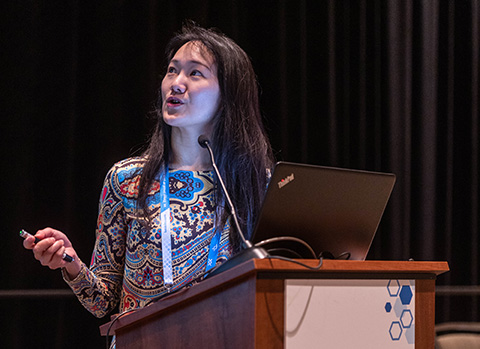
The American Society for Biochemistry and Molecular Biology is seeking self-nominations from members interested in giving talks about their research and pedagogy at Discover BMB in Chicago in April 2025.
Roya Jaseb, the society’s meetings director, said this open call for self-nominations is an innovation intended to give ASBMB members greater visibility and influence on the meeting’s thematic programming.
Nominate yourself!
This is your chance to let the organizing committee know about your research. To apply, briefly describe (2,000 characters or fewer) your recent work as it relates to one of the meeting themes. See the themes and learn more.
“We want to make sure that the theme organizers are aware of all of the amazing expertise within the society. We hope that this initiative will broaden participation and make speaking opportunities more accessible for our members,” she said.
Members eligible to self-nominate include:
- Postdoctoral and clinical fellows and medical residents
- Early-career faculty members
- Midcareer faculty
- Investigators (academic or industry)
- Teaching faculty
Vahe Bandarian is a professor at the University of Utah and chair of the ASBMB Meetings Committee. He noted that many speakers in past years have not been ASBMB members, and one goal of this initiative is to increase member representation.
“In a perfect world, all speakers at the annual meeting would be members. After all, this is a meeting for them and by them,” he said. “But there is no way for the theme organizers to know about all the amazing work every single ASBMB member is doing. We have thousands of members.”
He continued: “Naturally, they’re going to come up with names of people whose work is familiar to them — people whose papers they’ve read, people they’ve trained and people they’ve collaborated with. And some of those people are not ASBMB members. By limiting self-nominations to members, the theme organizers will become aware of the work of members and identify those whose research deserves this prestigious platform.”
Bandarian also said he thinks the new process will help organizers produce meeting content that is more closely aligned with ASBMB members’ research interests. “While broad themes have be predetermined, soliciting speaker self-nominations ensures that the talks within those broad themes are of genuine interest to the biochemistry and molecular biology community,” he said.
Each applicant must select one of the following themes:
- Chemical tools to reveal new biology
- Empowering futures: The transformative power of mentorship in science
- Enzymes and psuedoenzymes
- Interorganellar signaling and communication
- Lipids and membranes
- Maximizing access through diversity, equity, inclusion and accessibility
- Metabolism and biosynthesis
- Metals of life: From microbes to medicine
- Molecular movement
- Oncogenic hubs: Transcriptional and epigenetic complexes in cancer
- RNA biology
- Structural biology of proteins and subcellular structures
- Synthetic biology
Each applicant will be asked to briefly describe (2,000 characters or fewer) their recent work as it relates to their chosen theme.
Only one submission per member is permitted, and organizers expect there may be many more applicants than available speaking slots, so some applicants may be asked to participate as session moderators instead.
Self-nominate today! The deadline is Jan. 15, 2024.
Enjoy reading ASBMB Today?
Become a member to receive the print edition four times a year and the digital edition monthly.
Learn moreFeatured jobs
from the ASBMB career center
Get the latest from ASBMB Today
Enter your email address, and we’ll send you a weekly email with recent articles, interviews and more.
Latest in Careers
Careers highlights or most popular articles
Upcoming opportunities
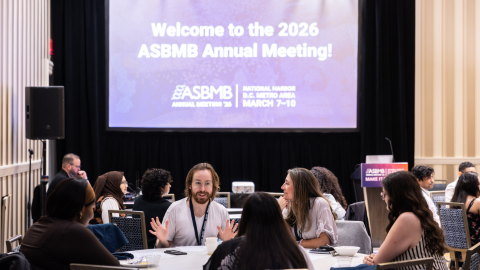
🗨️ Shape the conversation at ASBMB 2027 in Boston! ASBMB is seeking proposals for sessions and events that will foster collaboration, highlight exciting science and support career development across the molecular life sciences.
Upcoming opportunities
Registration is now open for this summer's Art of Science Communication course! Build your science communication skills in this 8-week online program. ➡️ Registration deadline: May 6.

Upcoming opportunities
The American Society for Biochemistry and Molecular Biology is accepting applications for the Marion B. Sewer Distinguished Scholarship for Undergraduates. Apply by April 30, 2026.
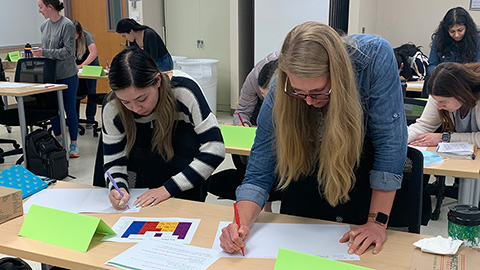
Designing scientific careers, not just experiments
Universities are rethinking how they prepare scientists for careers beyond the bench. From myIDP to Vanderbilt’s Career Architect, programs help trainees clarify values, explore options and build intentional paths forward.
Upcoming opportunities
Dive into the world of lipids! Join the ASBMB Lipid Research Division Seminar Series on April 9, 12–1 p.m. ET to hear early-career researchers explore lipid metabolism and mitochondrial biology.
Upcoming opportunities
For the summer 2026 ASBMB Today essay series, we invite scientists working in industry to share first-person reflections on their work. Submit your essay or pitch by April 15, 2026.