
New year, new goals: Advice for grad students
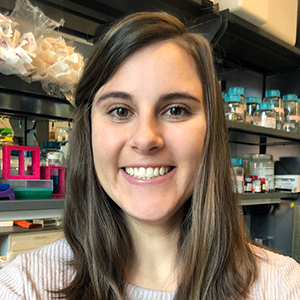
It’s hard to believe we are almost a month into 2025. For me, the transition into a new year means setting new goals for the months to come, and I always include at least a few professional goals on my list. Of course, these goals depend on where I am in my career journey.
To get a sense of what professional goals grad students might set for themselves, I spoke with Matt Selby, a fourth-year Ph.D. candidate at Rutgers University in the nutritional sciences department. Selby talked about his own goals and offered advice for grad students as we get into the new year.
Personal goals
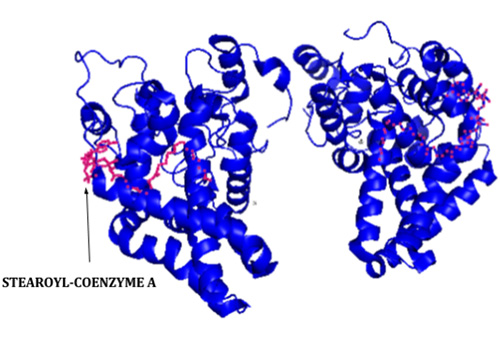
Selby studies intestinal lipid metabolism and specifically the impacts of a set of stearoyl-CoA desaturase, or SCD, enzymes. His major goal for 2025 is to publish his first first-author journal article on his research.
Selby said he’s always been motivated by career goals — such as building out his CV or meeting a specific graduation requirement — but has gained increased appreciation for literature contributions as he progressed through graduate school.
“Long story short, this first study was primarily negative results, so I was not particularly excited about the story or motivated to publish,” he said. “However, as I have learned more about SCD and the other literature, I have come to appreciate how my small contribution fits into the overall story and is still important to understanding the fascinating role of the SCD family.”
Beyond publication, Selby said he hopes to continue to gain new laboratory skills and improve professional skills such as time management and effective networking in the new year.
Advice for students
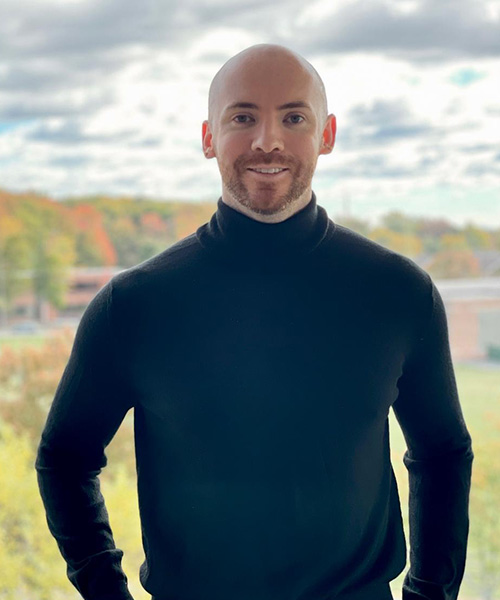
When asked about advice for his fellow grad students, Selby was clear: “Time management, time management, time management. Repeated three times, with increasing intensity and fervor each time.”
Selby recommends being thoughtful about setting up a daily and weekly schedule to ensure productivity.
“I really can’t stress enough how much more productive I am in a week when I make a schedule and actually put some thought into how long something takes,” he said.
While to-do lists work for some, Selby said he has a bad habit of writing a long list and then approaching it without a strategy.
“I certainly get a lot done, but there are always items I don’t get to,” he said. “You can’t help but feel disappointed you didn’t accomplish everything, despite it being an impossible workload.”
Instead, thinking about your schedule and planning your time can help you be realistic about the amount of work you can get done in a day and prevents time wasted on wondering what to start next.
Colleagues have advised Selby not to throw himself at every opportunity that comes his way — he thinks this advice is worth extending to others.
“I tend to be ambitious with how much I want to do, and underestimate how much time and energy it all takes,” he said. “As such, every student should be conscious of the limits of a 24-hour day, and make sure they don’t spread themselves too thin.”
Selby added a caveat to this advice, however, by saying he’s had some fantastic experiences he would have missed if he’d protected his time too much. Sometimes it’s worth saying yes to new experiences, as long as you can find the balance you need to avoid burnout.
“Don’t be afraid of a couple months of slog,” Selby said. “Life is full of tough periods, and you’ll come out of it with valuable experiences and knowledge you’d miss out on otherwise.”
Enjoy reading ASBMB Today?
Become a member to receive the print edition four times a year and the digital edition monthly.
Learn moreFeatured jobs
from the ASBMB career center
Get the latest from ASBMB Today
Enter your email address, and we’ll send you a weekly email with recent articles, interviews and more.
Latest in Careers
Careers highlights or most popular articles
Upcoming opportunities
🗨️ Shape the conversation at ASBMB 2027 in Boston! ASBMB is seeking proposals for sessions and events that will foster collaboration, highlight exciting science and support career development across the molecular life sciences.
Upcoming opportunities
Registration is now open for this summer's Art of Science Communication course! Build your science communication skills in this 8-week online program. ➡️ Registration deadline: May 6.

Upcoming opportunities
The American Society for Biochemistry and Molecular Biology is accepting applications for the Marion B. Sewer Distinguished Scholarship for Undergraduates. Apply by April 30, 2026.
Designing scientific careers, not just experiments
Universities are rethinking how they prepare scientists for careers beyond the bench. From myIDP to Vanderbilt’s Career Architect, programs help trainees clarify values, explore options and build intentional paths forward.
Upcoming opportunities
Dive into the world of lipids! Join the ASBMB Lipid Research Division Seminar Series on April 9, 12–1 p.m. ET to hear early-career researchers explore lipid metabolism and mitochondrial biology.
Upcoming opportunities
For the summer 2026 ASBMB Today essay series, we invite scientists working in industry to share first-person reflections on their work. Submit your essay or pitch by April 15, 2026.