
The American Society for Biochemistry and Molecular Biology advances scientific knowledge by reducing barriers to research. ASBMB journals are gold open access.
Who we are and what we do: Founded in 1906, the ASBMB has advanced science discoveries in the life sciences by publishing and promoting the highest-quality research in biochemistry and molecular biology.
Why us?: ASBMB journals are committed to helping scientists disseminate their findings in the most efficient and effective way. We strive to keep review times short, provide useful feedback and promote contributions after publication.
Journal of Biological Chemistry
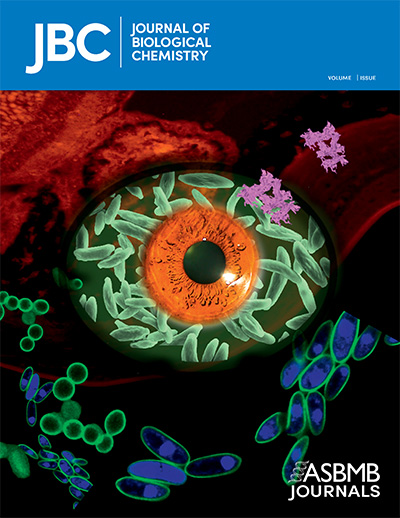
The Journal of Biological Chemistry seeks to elucidate the molecular and cellular basis of biological processes. In addition, JBC welcomes articles that describe methods that will help scientists push their biochemical inquiries forward and resources that will be of use to the research community.
All accepted manuscripts are available to the public for free within 48 hours of acceptance. The average time from submission to first decision is 21 days for regular articles and even shorter for JBC Communications.
JBC is broadening its scope to include rigorous studies that offer conceptual advances, enabling methods and foundational insight, while maintaining its longstanding emphasis on mechanistic rigor, transparency and reproducibility.
Industry and academic scientists collaborated to develop a rat with humanized iron-transport receptors, enabling research into iron homeostasis and drugs that cross the brain’s barrier.
A dull first job nearly pushed JBC associate editor Todd Graham out of science. Then a slime mold project changed his path. Now, he studies membrane biology and reflects on discovery, persistence and mentoring through uncertainty.
Molecular & Cellular Proteomics
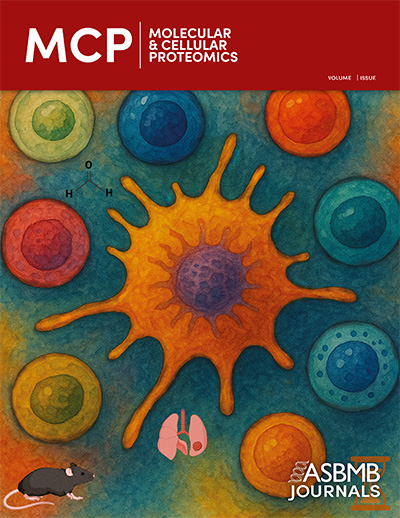
Molecular & Cellular Proteomics publishes articles such as research articles, reviews, technological innovation resources and perspectives, that make a substantial contribution to the understanding of any area of proteomics. MCP has been a leading force in setting up the standards for proteomics reporting by creating guidelines for mass spectrometric analyses covering protein, peptide or post translational modifications and quantification.
Submit your research to MCPLearn more about MCP
Researchers at the University of Washington, Seattle present the first quantitative comparison of mitochondrial interactomes between two epithelial cell types in the kidney.
Researchers at Taipei Medical University present the first site-specific glycosylation analysis of immunoglobulins in elderly tuberculosis patients.
Researchers at the University of Santiago de Compostela show that total serum N-glycome can predict mortality independent of traditional risk factors.
Journal of Lipid Research
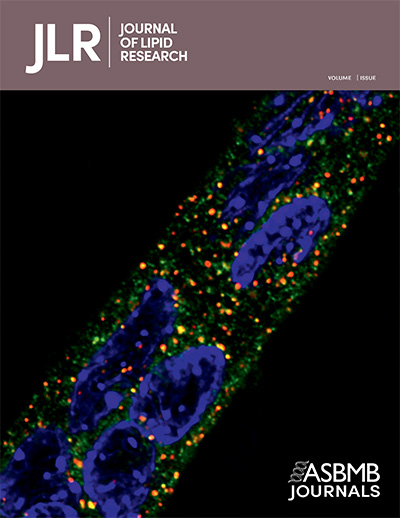
The Journal of Lipid Research focuses on the science of lipids in health and disease. The journal emphasizes lipid function and the biochemical and genetic regulation of lipid metabolism and aims to be on the forefront of the emerging areas of genomics, proteomics, metabolomics and lipidomics as they relate to lipid metabolism and function. In addition, JLR publishes manuscripts on patient-oriented and epidemiological research relating to altered lipid metabolism, including modification of dietary lipids.
Researchers show that altered lipid metabolism may contribute to postoperative delirium, a condition linked to increased risk for long-term cognitive decline. The study explores potential disease mechanisms, which have yet to be understood.
Researchers found that a deficiency of the fatty acid synthesis enzyme stearoyl-CoA desaturase-1 reduced mammary gland function during lactation and caused low birth weight in newborns that were fed milk from enzyme-deficient glands.
Researchers identify a link between cholesterol-regulating genes and liver transplant success, which could improve donor screening and patient outcomes.
Insights in Biochemistry and Molecular Biology
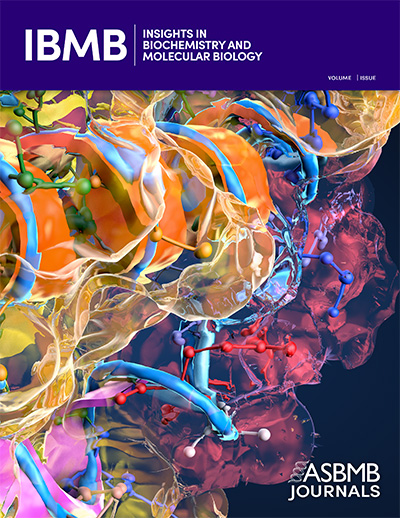
Insights in Biochemistry and Molecular Biology is ASBMB’s newest addition to the portfolio of gold open access journals. IBMB will welcome research across the molecular life sciences, accepting de novo submissions beginning in 2026 as well as providing easy transfers for submissions from other ASBMB journals. The journal aims to provide a venue for rigorous, well-executed research that advances understanding across the molecular life sciences, whether by generating new discoveries and hypotheses, confirming existing models or revealing unexpected results.