
Biochemistry and molecular biology
The backbone of the molecular life sciences
Breakthroughs don’t begin with treatments or technologies; they begin at the molecular level.
Biochemistry and molecular biology provide the shared foundation that makes discovery possible across the life sciences.
BMB: A universal toolkit for molecular life science
Biochemistry and molecular biology are not endpoints — they are enabling disciplines. Together, they provide the concepts, methods and molecular understanding that researchers across fields rely on to do their work.
- Biochemistry: Investigates the composition of molecules and chemical reactions in life.
- Molecular biology: Delves into the processes those molecules carry out to make life possible.
Nearly every biological question ultimately intersects with BMB. It is the common language of molecular life science that improves health and quality of life.
Who uses BMB?
Scientists across disciplines work to uncover knowledge about the natural world. Chemists focus on the properties, reactions and structure of molecules, inside or outside of living systems. Neuroscientists study how the brain and nervous system function. Immunologists study the immune system and how the body defends itself against disease. Microbiologists study microscopic organisms and their interactions with their hosts, the environment and each other.
Molecular life scientists, whose research is powered by the tools, technologies and principles of BMB, focus on the function of biological molecules — proteins, nucleic acids, lipids, carbohydrates — uncovering the underlying mechanisms that drive cells, tissues and organisms. Molecular life scientists use BMB to study how life works at its most fundamental scale: molecules, pathways and systems that operate in every living organism. Their research is not an end in itself, it powers progress everywhere.
Many scientists who consider themselves chemists, anatomists, physiologists, neuroscientists, microbiologists, immunologists, virologists and more are also molecular life scientists.
You might be a molecular life scientist if you use the tools of BMB to understand how life works at the molecular level. Scientists whose research is powered by BMB include:
- Anatomists
- Bioengineers
- Biophysicists
- Cell biologists
- Chemists
- Computational biologists
- Developmental biologists
- Geneticists
- Immunologists
- Microbiologists
- Molecular pathologists
- Neuroscientists
- Pharmacologists
- Physiologist
- Proteomics researchers
- Structural biologists
- Systems biologists
- Toxicologists
- Virologists
Interested in a career in these sectors? Find jobs and more at the ASBMB Career Center.
What BMB powers
Molecular life scientists rely on biochemistry and molecular biology to explore life at its most fundamental scale. BMB-powered discovery drives real-world impact, forming the foundation of the scientific and medical advances society depends on.
Many of today’s most transformative advances trace back to decades of fundamental BMB-powered research:
- Diagnostics and genomic testing — learn about genetics and proteomics.
- Vaccines and therapeutics — learn about immunology.
- Precision medicine and targeted cancer treatments — learn about disease mechanisms and treatments, cancer and rare diseases.
- Metabolic and cardiovascular drugs — learn about metabolism and lipids.
- Neurodegenerative disease research — learn about neurobiology.
- Infectious disease surveillance and response — learn about infectious disease and microbiology.
- Agricultural and food innovations — learn about food and nutrition and plant biology.
- Biotechnology and bioengineering — learn about the biotech industry.
- Computational and structural biology tools — learn about computational and structural biology.
Public funding agencies play a critical role by supporting the basic research that generates new molecular knowledge. Industry partners build on these discoveries to develop diagnostics, medicines and technologies, while clinicians, patients and communities ultimately realize the benefits.
Biochemistry and molecular biology sit at the center of the life science research ecosystem, connecting curiosity-driven research to applied outcomes. Sustained, predictable investment in BMB is necessary to maintain a robust pipeline of discovery, innovation and public benefit across science, medicine and biotechnology.
We power discovery. We’re powered by BMB.
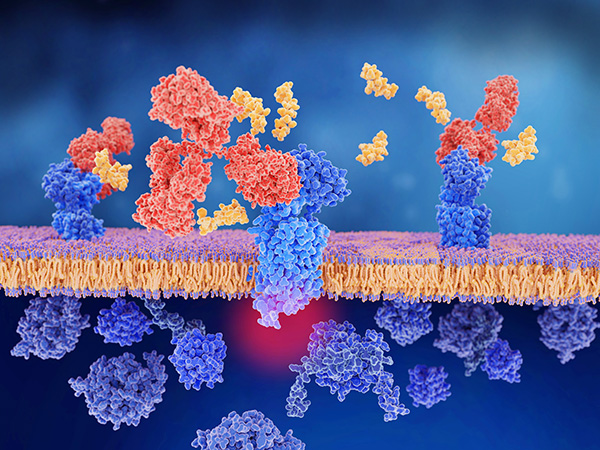
The calcitonin gene-related peptide, or CGRP, (yellow) binds to its receptor (blue) on neurons and smooth muscle cells of cerebral blood vessels, activating a signal cascade through G-proteins (dark blue) that leads to a dilation of the blood vessels. Blocking the CGRP receptor reduces the quantity of migraine attacks.
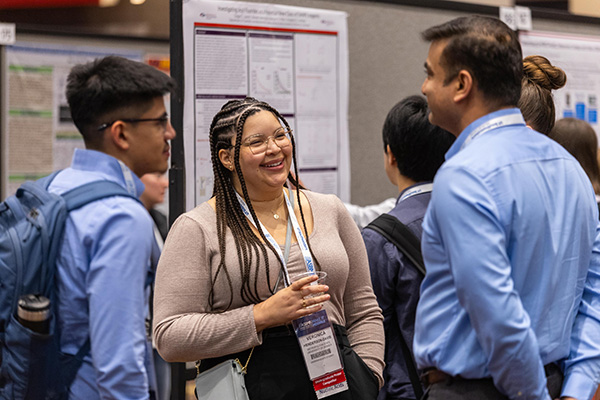
The ASBMB Annual Meeting is a gathering of scientists from all corners of the molecular life sciences. The meeting highlights how core BMB principles intersect with real-world challenges in health, disease, energy and the environment.