
From insight to impact
ASBMB 2027 is a convergence point for the molecular biosciences, where disciplines meet and new ideas emerge.
Alongside the symposia, the program brings together a dynamic mix of keynote and plenary talks, cross-disciplinary sessions on cutting-edge science, hands-on workshops, and curated spaces for collaboration and connection. Attendees can engage in career development programming, community-led interest group gatherings, and immersive networking experiences, with opportunities for industry partners to participate through exhibitions and strategic partnerships.
Join a global community of scientists and researchers at ASBMB 2027 sharing insights that drive real-world impact.
Sign up for email updates to get the latest news about meeting programming, deadlines and more.
Organizers
ASBMB Annual Meeting 2027 co-chairs
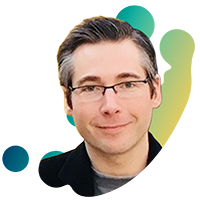
W. Mike Henne
University of Texas Southwestern Medical Center
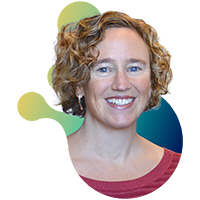
Amy E. Palmer
University of Colorado Boulder
Shape the scientific conversation. Share your expertise.
Organize a mini-symposium, interest group session or workshop at the ASBMB Annual Meeting and help drive the dialogue at the forefront of the molecular life sciences.
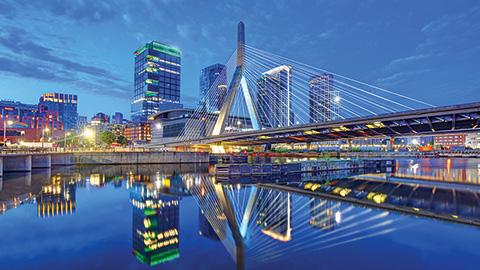
Meet at the nexus of discovery
Boston is where research, innovation and translation intersect in the life sciences. With world-class institutions, pioneering research and a deeply embedded scientific community, the city is a true hub of discovery. Connect with the people and ideas driving what’s next at ASBMB 2027.
Deep dives
Start each day with inspiring plenary sessions on cutting-edge science, then dive deeper into each topic throughout the day.
AI-guided protein design
- Adam Frost, Altos Labs
- Tristan Bepler, New York Structural Biology Center
Microecology and pharmacology of the gut microbiome
- Peter Turnbaugh, University of California, San Francisco
- Andrew Goodman, Yale School of Medicine
Organoids in physiology and disease
- Zev Gartner, University of California, San Francisco
- Pulin Li, Whitehead Institute for Biomedical Research; MIT
Symposia
See talks from scientific leaders driving discovery and innovation through biochemistry and molecular biology. Learn more
21st century applications of proteomics
- Dustin Maly, University of Washington
- Christina Woo, Harvard University
This theme highlights cutting-edge proteomic approaches to understanding protein interactions, modifications, and complexes, with a focus on chemoproteomics and therapeutic discovery.
Beyond oil and water — Complexity of biomolecular condensates
- Roy Parker, University of Colorado Boulder
- Michael Rosen, University of Texas Southwestern Medical Center
Focusing on recent work to understand the various aspects of condensate complexity, and how they contribute to function, regulation and disease.
Cell biology of the brain and neurodegeneration
- Maria Ioannou, University of Alberta
- Jim Hurley, University of California, Berkeley
Organelle dysfunction is a key feature of neurodegenerative diseases, affecting processes such as axonal transport, autophagy, mitochondrial dynamics, and lipid metabolism. This symposium explores how organelle disruption contributes to disease across different brain cell types and brings together researchers to examine organelle roles in both health and neurodegeneration.
Chemical toolbox
- Jeremy Baskin, Cornell University
- Bryan Dickinson, University of Chicago
Chemical biology leverages custom-designed molecules to probe biological systems with precision. This session brings together research across small molecule probes, spatial biology, and synthetic biology to uncover the molecular logic of living systems.
Coordination chemistry to tackle challenges in human health, energy and the environment
- Liz Nolan, Massachusetts Institute of Technology
- Caryn Outten, University of South Carolina
Lipids in action
- L. Ashley Cowart, Virginia Commonwealth
- Chris Burd, Yale School of Medicine
Organelle quality control
- Roberto Zoncu, University of California, Berkeley
- Natalie Niemi, Washington University in St. Louis
Organelles function as interconnected systems that integrate cellular inputs and dynamically respond to changing demands. Their membranes host signaling machinery that enables communication between organelles and with the nucleus. This session highlights how proteins, lipids, and signaling pathways regulate organelle quality control, stress responses, and inter-organelle coordination across normal physiology and disease.
Protein import/export
- YuhMin Chook, University of Texas Southwestern Medical Center
- Peter Kim, The Hospital for Sick Children Research Institute
This symposium focuses on protein transport across nuclear and peroxisomal membranes, including structural organization, transport mechanisms, and system maintenance, highlighting emerging principles in selective protein transport.
Stem cells
- Jun Wu, University of Texas Southwestern
- Mingxia Gu, University of California, Los Angeles
This session explores advances in stem cell biology, including pluripotency, embryo models, organoids, and induced pluripotent stem cells (iPSCs). It also covers bioengineering approaches for complex tissue construction and regenerative applications, highlighting how stem cell technologies are transforming human development and disease research.
The future of RNA structure and structure prediction
- Kalli Kappel, Univeristy of California, Los Angeles
- Silvi Rouskin, Harvard University
RNA structure research is rapidly evolving through advances in experimental and computational methods. This session explores new techniques for resolving RNA structures, machine learning approaches for prediction, and challenges such as understanding RNA dynamics and cellular interactions.
Adapting for a changing landscape
- Yass Kobayashi, University of Georgia School of Medicine
- Kiesha Wilson, University of South Carolina School of Medicine
- Tim Rhoads, University of Wisconsin–Madison
This program prepares scientists for an evolving workforce by exploring industry pathways, career preparation, and strategies to expand access to science, equipping attendees to remain resilient and impactful.
Professional development across career stages
- Masood Sepehrimanesh, Louisiana Tech University
- Kristin Dittenhafer–Reed, Hope College
- Tom Kiselak, Thermo Fisher Scientific
This track explores lifelong professional development, from training to independent careers, covering scientific and transferable skills, as well as the role of emerging technologies in career growth.
ASBMB Journals symposia