
Winzeler honored for leadership, antimalarial drug-discovery work
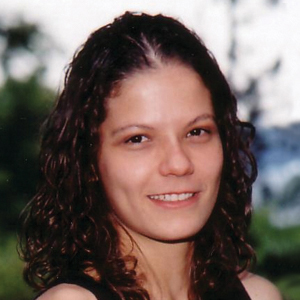
The 2018 winner of the Alice and C.C. Wang Award in Molecular Parasitology is Elizabeth A. Winzeler, a professor of pediatrics at the University of California, San Diego. The award honors seminal contributions and cutting-edge research in molecular parasitology. Winzeler is recognized for her groundbreaking work in antimalaria drug discovery.
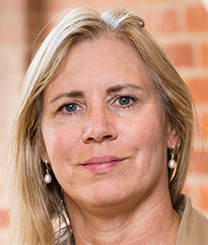
“I am incredibly grateful to Alice and C.C. Wang for establishing this award. C.C. Wang was a pioneer in the field of parasitology and I am honored to receive an award that bears his name. The recognition is bittersweet this year as C.C. will not be able to attend the events and enliven them with his humor, and great enthusiasm.”
— Elizabeth A. Winzeler
Winzeler obtained her Ph.D. in 1996 at Stanford University, where she worked in bacterial transcription with Lucy Shapiro. She pursued postdoctoral training in the Ronald Davis laboratory at Stanford, working on yeast genomics and expression. In 1999, Winzeler joined the Novartis Research Foundation’s Genomics Institute as a staff scientist, and she continues there as head of the department of cellular biology. She joined the department of cell biology at The Scripps Research Institute in 2000. In 2012, she moved to the University of California, San Diego, as director of translational research at the UC Health Sciences Center for Immunology, Infection and Inflammation and professor in the division of pharmacology and drug discovery.
Winzeler’s work involves the use of big data from whole-genome sequencing and genomics to identify novel drug targets and genes that contribute to pathogen drug resistance. Much of her work has focused on the parasite responsible for malaria, Plasmodium falciparum, and, more recently, Plasmodium vivax. Her significant contributions include the development of high-throughput phenotypic assays using P. falciparum asexual blood and liver stages to identify anti-malarial agents and the identification of over 10,000 different compounds with anti-malarial activity. One of those compounds is an inhibitor of P. falciparum Na+-dependent ATPase, PfATP4, and is the first novel anti-malarial chemotype in 20 years to reach human clinical trials. Winzeler also identified the imidazolopiperazine scaffold, which allowed the selection of resistant parasites with mutations in the endoplasmic reticulum protein, PfCARL. These compounds showed potent anti-liver and blood stage activity in a mouse malaria model, and one of them is now part of a drug development campaign. Winzeler also led the efforts that identified tRNA synthetases and a phospholipid kinase, PI4K, as promising anti-malarial drug targets.
David A. Fidock, a Columbia University professor of microbiology and immunology, supported Winzeler’s nomination, writing, “she is a highly gifted and visionary scientist who has made tremendous contributions to the field of molecular parasitology.” Fidock and Winzeler are part of an international, multi-year malaria drug target identification program funded by the Bill and Melinda Gates Foundation. Winzeler was named principal investigator of the program. She is also part of the Medicines for Malaria Venture, a global partnership for anti-malarial drug research and development.
Victor Nizet, a colleague at UC San Diego, commended Winzeler’s “brilliant work and intuition for selecting and completing (and publishing) high impact projects,” as evidenced by more than 20,000 manuscript citations.
Dyann Wirth, professor at the Harvard T.H. Chan School of Public Health, wrote that Winzeler seeks drugs that can be used to eliminate malaria: “Her own work leads the way in this effort, but she has brought together one of the most successful collaborative projects in the field. Her leadership, vision and scientific acumen are key to this success.”
Winzeler received her award during the 2018 ASBMB Annual Meeting. Her award lecture was titled “Using in vitro evolution and chemogenomics to explore the malaria parasite drug-able genome"
Enjoy reading ASBMB Today?
Become a member to receive the print edition four times a year and the digital edition monthly.
Learn moreGet the latest from ASBMB Today
Enter your email address, and we’ll send you a weekly email with recent articles, interviews and more.
Latest in People
People highlights or most popular articles
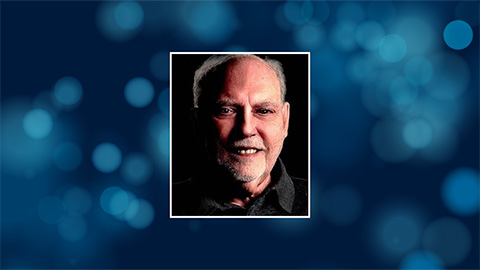
In memoriam: Walter A. Shaw
He is the namesake for the Walter A. Shaw Young Investigator Award in Lipid Research and founded Avanti Polar Lipids.
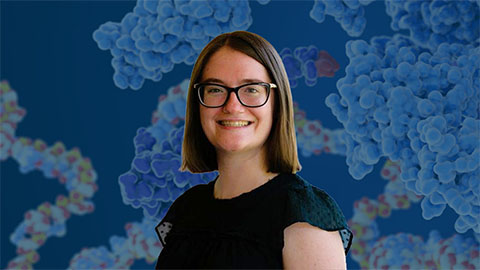
Dorn named assistant professor
She will open her lab at the University of Vermont in fall 2026, and her research will focus on catalysis, synthetic methodology and medicinal chemistry.
The data that did not fit
Brent Stockwell’s perseverance and work on the small molecule erastin led to the identification of ferroptosis, a regulated form of cell death with implications for cancer, neurodegeneration and infection.
Building a career in nutrition across continents
Driven by past women in science, Kazi Sarjana Safain left Bangladesh and pursued a scientific career in the U.S.
Kiessling wins glycobiology award
She was honored by the Society for Glycobiology for her work on protein–glycan interactions.
2026 ASBMB election results
Meet the new Council members and Nominating Committee member.