
Yang a 'highly accomplished crystallographer'
Wei Yang, an investigator and section chief of structure and mechanism at the National Institutes of Health, has won the Mildred Cohn Award in Biological Chemistry from the American Society for Biochemistry and Molecular Biology. The Cohn award honors the first president of the ASBMB and recognizes scientists who have advanced our understanding of biological chemistry through physical methodologies. Yang received the award in recognition of her work on elucidating the structure and function of proteins involved in genome maintenance.
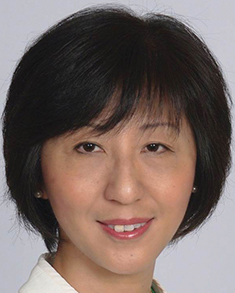
“I am thrilled and deeply humbled to receive the Mildred Cohn Award in Biological Chemistry. Dr. Cohn, an extraordinary scientist, mentor and former ASBMB president, was a pioneer and both a role model and inspiration to me and my generation of women scientists.”
— WEI YANG
Philip Hanawalt of Stanford University wrote in support of Yang’s nomination, saying he could “think of no person more deserving than Wei Yang for this recognition of a woman who has made substantial advances in understanding biological chemistry using innovative physical approaches.”
Much of Yang’s work has focused on structural characterization of proteins involved in DNA mismatch repair and translesion DNA synthesis. She has solved the crystal structures of bacterial MutL, MutS, MutH and DNA helicase II proteins in complex with their DNA substrates. This work, plus activity assays, serves as the foundation for understanding how the mismatch repair system recognizes and removes mismatched DNA to ensure high fidelity during DNA replication.
In collaboration with Roger Woodgate of the NIH, Yang’s team determined the first crystal structure of a Y-family DNA polymerase complexed with a DNA lesion and engaging in bypass synthesis. Subsequently, in collaboration with Fumio Hanaoka in Japan, who discovered human Y-family DNA polymerase eta, or Pol eta, her team elucidated the molecular mechanism Pol eta uses to bypass ultraviolet-induced DNA lesions and avoid mutations and malignancy.
“She moves smoothly from one field to another,” said Hanawalt in his letter, “always providing the insights that are derived from her understanding of fundamental crystallographic approaches.”
In more recent work, Yang and her team used time-resolved crystallographic techniques to study the mechanism of DNA synthesis. This allowed them to construct the first detailed picture of phosphodiester bond formation by a human polymerase, which included a description of the transient recruitment of a magnesium ion and interactions needed for nucleotide addition.
“Dr. Yang is both an outstanding crystallographer and an outstanding biochemist,” said Martin Gellert of the NIH in his letter of support for Yang’s nomination. “This combination of talents has enabled her to obtain deep insights into several important biological systems in the general field of DNA repair and recombination.”
Yang earned her Ph.D. from Columbia University in 1991. As a graduate student in Wayne Hendrickson’s laboratory, Yang, along with Robert Crouch of the NIH, determined the first crystal structure of RNase H bound to its RNA/DNA substrate, thereby establishing how this protein removes the RNA primers made during DNA replication. She characterized the structure and function of the UvrD helicase. This work revealed a distinct role for UvrD helicase in mismatch repair in addition to its traditional role in repairing DNA lesions produced by ultraviolet light.
Yang went on to postdoctoral fellowships at both Columbia University and Yale University. In 1995, she was recruited to the NIH as a tenure-track investigator at the National Institute of Diabetes and Digestive and Kidney Diseases.
Yang is a member of both the National Academy of Sciences and the American Academy of Arts and Sciences. She has received the Dorothy Crowfoot Hodgkin Award from the Protein Society and the Bea Singer Young Investigator Award from the Gordon Research Conference on Mutagenesis and Carcinogenesis.
Enjoy reading ASBMB Today?
Become a member to receive the print edition four times a year and the digital edition monthly.
Learn moreGet the latest from ASBMB Today
Enter your email address, and we’ll send you a weekly email with recent articles, interviews and more.
Latest in People
People highlights or most popular articles
Uncovering the molecular roots of fatty liver disease
Physician–scientist Silvia Sookoian discusses her path from hepatitis C care to MASLD research, her use of multi-omics to study steatotic liver disease, and how lipid metabolism and genetics are reshaping understanding of MASH and liver health.
Kimble honored for lifetime achievement in genetics
She received the 2026 Thomas Hunt Morgan Medal and will be honored with a dedicated online profile and seminar.
Janetka named distinguished professor
Washington University awarded him the inaugural Carl Frieden Distinguished Professorship.
ASBMB members receive ASPET awards
The American Society for Pharmacology and Experimental Therapeutics awards Simone Brixius–Anderko, Paul Insel, Sudarshan Rajagopal, Emily Scott, Alan Smrcka and Jürgen Wess for their excellent research and mentoring work in pharmacology.
Kozul honored by Washington University
She received the 2025 Elliot L. Elson Education and Training Award.
de la Fuente honored for AI research
The award will support the development of an AI system called ApexMol, a 3D structure–informed, agentic large language model designed to create new biomolecules.