
Iron metabolism work
wins Tabor award
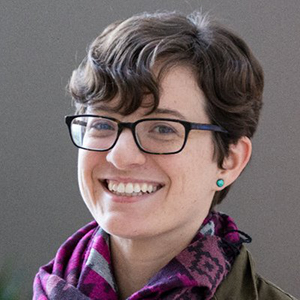
Nathan B. Johnson compares experimental biology to another challenging process of optimization, fly fishing: “You go to the stream and see what flies are hatching on the surface or what nymphs there are under rocks, and then you try to match the hatch the best you can. Like science, fly fishing success is dependent on accurate observations, predictions, reproducibility, presentation and luck.”
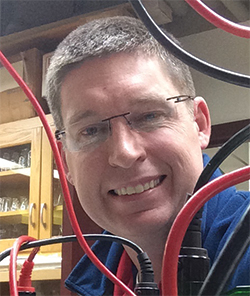
But, he admits, the analogy can break down: “You can sometimes catch a fish in a day; it’s hard to complete an experiment in a day.”
Johnson won a 2018 Journal of Biological Chemistry/Herbert Tabor Young Investigator Award for his work on iron homeostasis, conducted as a graduate student and postdoc at the University of Wisconsin–Madison and published last year in JBC.
It all started with the University of Tennessee Agricultural Extension 4-H program. “I didn’t plan on being a scientist,” Johnson said. “I grew up in rural east Tennessee and was active in a 4-H project, part of the meat product evaluation team.” He followed that track to major in food science and technology. Almost as soon as he started learning the principles of nutritional biochemistry, he realized he would love to teach them.
Biochemistry coursework for a master’s degree in nutritional science introduced him to bench science, another activity he found he enjoyed.
To find out whether he liked research as much as teaching, Johnson took a job as a lab manager in Deborah Segaloff’s lab at the University of Iowa. He managed the lab and worked on structural characterization of gonadotropin receptors. “After doing that for five years, I sort of felt as though I had reached a plateau,” he said, and so he decided to pursue a Ph.D.
Johnson joined the program in biochemical and molecular nutrition at the University of Wisconsin-Madison. He was drawn to work in the lab of Richard Eisenstein by the opportunity to design his own project.
“He gave us the freedom to think critically and to work independently, and I thought, ‘That’s what I really need in order to succeed in science,’” Johnson said.
Since leaving Eisenstein’s lab, Johnson has been a postdoc in Rozalyn Anderson’s lab in Madison, studying a transcriptional coactivator upregulated in response to aging and caloric restriction. He also has developed curricula and is the instructor for three online courses on macronutrient metabolism, personalized nutrition and micronutrient metabolism for the new online master’s degree in clinical nutrition program at Madison.
“I’m in the process of transitioning to a full-time teaching role, which was what initially piqued my interest in research,” he said. “It’s sort of neat to come full circle.”
Controlling iron uptake for cell health
Iron levels in a cell need to be just right. Excessive free iron causes accumulation of reactive oxygen species; deficiency causes anemia. Therefore, cells express a complex system of proteins to calibrate iron uptake and storage.
Two iron-response proteins, IRP1 and IRP2, respond to a low cytoplasmic iron level by binding to RNAs, increasing translation of iron-uptake proteins and reducing translation of iron-storage proteins. This response increases cellular iron level. When free iron is adequate, the two proteins are turned off to prevent excessive accumulation.
Until recently, the two IRPs were thought to be inactivated by distinct mechanisms: IRP1 by adding an iron-sulfur group and IRP2 by ubiquitination. Johnson and colleagues explored crosstalk between the two downregulation pathways, demonstrating that nothing in the system is as linear as it had seemed. They published their work in JBC in August.
When the iron sulfer-cluster machinery was absent, the researchers saw that IRP1 could be degraded by the ubiquitin ligase that destroys IRP2. They also found that impaired iron-sulfur assembly increases levels of the ubiquitin ligase, indicating that the ligase is an important backup mechanism for IRP turnover.
Enjoy reading ASBMB Today?
Become a member to receive the print edition four times a year and the digital edition monthly.
Learn moreGet the latest from ASBMB Today
Enter your email address, and we’ll send you a weekly email with recent articles, interviews and more.
Latest in People
People highlights or most popular articles
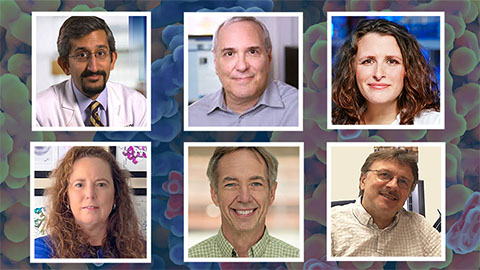
ASBMB members receive ASPET awards
The American Society for Pharmacology and Experimental Therapeutics awards Simone Brixius–Anderko, Paul Insel, Sudarshan Rajagopal, Emily Scott, Alan Smrcka and Jürgen Wess for their excellent research and mentoring work in pharmacology.
Kozul honored by Washington University
She received the 2025 Elliot L. Elson Education and Training Award.
de la Fuente honored for AI research
The award will support the development of an AI system called ApexMol, a 3D structure–informed, agentic large language model designed to create new biomolecules.
In memoriam: Peter Roepstorff
He was a leading researcher in biological mass spectrometry, mapped protein function in living organisms and was an ASBMB member for 19 years.
Flipping lipids and slime molds
A dull first job nearly pushed JBC associate editor Todd Graham out of science. Then a slime mold project changed his path. Now, he studies membrane biology and reflects on discovery, persistence and mentoring through uncertainty.
ASBMB members receive RNA Society awards
The RNA Society awards Brenda Bass, Can Cenik and Karin Musier–Forsyth for their achievements in RNA research and innovation. Winners will be recognized at the closing awards ceremony of the RNA 2026 annual meeting.