
At the forefront with Avanti
Avanti Polar Lipids probably would not exist if it hadn’t been for a brother and sister born of incest. The siblings suffered from a genetic disease. A researcher got involved in understanding some of the molecular details of the disease. That researcher was Walter Shaw.
As a series of events unfolded in the 1960s and 1970s, his project spun off into what would become one of the most recognized suppliers of lipid products. Today, Avanti Polar Lipids, which 72-year-old Shaw owns and runs with his wife, Rowena, has 110 employees in Alabaster, Ala.
In 1967, when he was a laboratory director at the Medical College of Virginia, tubes of blood from the brother-sister pair landed in Walter Shaw’s hands. The siblings had type I hyperlipidemia, which meant they couldn’t metabolize fats properly. The brother and sister “would periodically come to the emergency room to be treated for pancreatitis caused by eating a fatty meal,” says Shaw. Shaw’s boss, clinician-researcher William Harlan, had the siblings’ permission to take blood samples for research purposes during their hospital visits.
Harlan already had established that the siblings were missing the adipose tissue lipase commonly called lipoprotein lipase. They had problems with processing neutral triacylglycerols. But the patients had phospholipase activity. What enzyme produced this phospholipase activity? Shaw was tasked with finding that out.
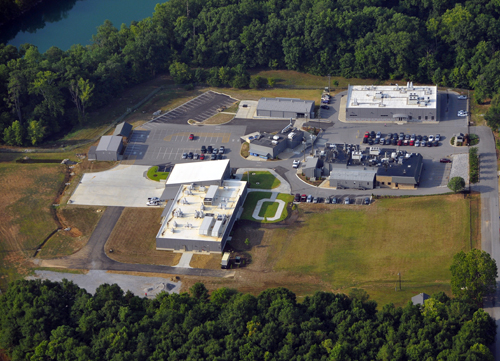 Aerial view of Avanti’s campus.
Image courtesy of Walter Shaw.
Aerial view of Avanti’s campus.
Image courtesy of Walter Shaw.
Shaw and others in Harlan’s group developed an assay to track the phospholipase activity. The mysterious enzyme was very slow and required lots of substrate egg phosphatidylcholine. A single incubation consumed 10 grams of the substrate. Shaw and Peter Jezyk, now a veterinarian in Arizona, were in charge of purifying kilos of phosphatidylcholine from eggs. The researchers soon switched to a radioactive substrate that could be used in smaller amounts, but by then Shaw and Jezyk knew how to purify buckets of egg phosphatidylcholine and happened to have some left over.
When not cracking eggs with Jezyk, Shaw had another project to worry about. He and Harlan were trying to figure out why the red blood cells of severely burned patients looked like spiky balls instead of the usual biconcave disks. It was Shaw’s responsibility to collect the weepage from the victims’ third-degree burns, which covered more than one-third of their bodies. To this day, Shaw says he has horrible flashbacks to the weepage collections.
In trying to understand why the red blood cells of burn victims turned spiky, Shaw needed to learn a purification technique. To learn the method, he had to go to The Ohio State University, where he had earned his master’s degree, to visit a researcher who could teach it to him. While he was in Cleveland, Shaw decided to drop by a company called Grand Island Biological Company. The company is better known today as GIBCO and is now part of Invitrogen. On the Friday he walked into the company’s office, its leaders were grappling with a problem. Their lipid supplier in India had had a facility fire and was unable to deliver materials. When Shaw mentioned he had several kilos of egg phosphatidylcholine handy, “They bought it on the spot,” he says.
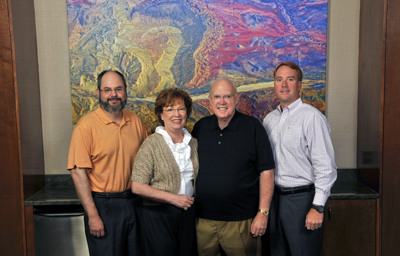 L–R: Stephen Burgess, Rowena Shaw, Walt Shaw and Trevor Shaw.
Image courtesy of Walter Shaw.
L–R: Stephen Burgess, Rowena Shaw, Walt Shaw and Trevor Shaw.
Image courtesy of Walter Shaw.
His first sale wasn’t anything to make him rich, says Shaw, but it did land him an annual contract of $12,000 to supply GIBCO with lipids. When he got back to Virginia, he and Jezyk established a company called Laboratory Pure Biochemicals. An assistant professor at the Medical College of Virginia, Joseph Liberti, who later joined Virginia Commonwealth University and passed away in 2009, knew the executives at GIBCO. “He said, ‘If you let me in on this deal, we can sell them millions of dollars' worth of lipids instead of $12,000 a year,’” says Shaw. The trio rented laboratory space from the University of Richmond for the business endeavor.
But first, Liberti, an Italian by blood, objected to the company name. He told his partners that “Laboratory Pure Biochemicals” was terrible and instead suggested “Avanti,” the Italian word that means to go forward.
“I wrote a catalog”
In January 1969, Avanti Biochemicals began business. Shaw, Jezyk and Liberti quickly learned the ropes of making high-quality lipids and began shipping them to GIBCO. But it was arduous. Each day, after doing research at MCV, they drove to their rented space and worked well past midnight making lipids. Despite their hard work, “From January to July, sales of lipids to Grand Island Biological did not increase by leaps and bounds,” says Shaw. “Joe and Pete got tired of this in a hurry.”
That summer, Jezyk and Liberti told Shaw they wanted out of Avanti Biochemicals. Shaw bought each out for $500. At the same time, Harlan informed Shaw that he was going to move to the University of Alabama at Birmingham. He asked if Shaw would like to move with him as a graduate student and do his Ph.D. work on the brother-sister phospholipase activity. Shaw agreed. In September 1969, Walter and Rowena Shaw moved to Alabama with their young children.
For four years at UAB, Walter Shaw did his thesis work, oversaw two university lipid laboratories and ran Avanti, which by then was supplying GIBCO with lipids worth $16,000 a year. “I was a busy guy,” he says.
But it wasn’t smooth sailing. Shaw’s initial thesis project based on the brother-sister project at MCV was to isolate the enzyme responsible for the phospholipase activity. But after a year, “my results hit a stone wall, and my research ground to a halt,” he says.
Alarmed, he began to consider changing projects. But one day, he came across a research article published by W. Virgil Brown’s group at the University of California, San Diego. The paper described a liver enzyme that had triacylglycerol hydrolytic activity. Shaw called Brown “and told him that I had the other half of the story, phospholipase activity,” he recalls. Brown invited Shaw to work with him in California, which Shaw did. They eventually demonstrated that the enzyme, a liver lipase, has both triacylglycerol and phospholipase activity. Shaw says this time was a major turning point in his life and taught him that “research is unpredictable, and hard times are growing experiences.”
In 1973, after Shaw graduated with his Ph.D. from UAB, he suggested to GIBCO that he set up a lipid division for it in Ohio. But GIBCO executives had other plans. “They informed me that lipids had absolutely no future. They didn’t want me to set up a lipid lab for them,” says Shaw. “In fact, they were going to cancel the contract.”
For some reason, GIBCO’s rejection didn’t faze Shaw. “It went right over my head,” he says. He decided instead to rent a 900-square-foot cement-block garage in Pelham, a town outside of Birmingham, change the company name to Avanti Polar Lipids, because that’s all the company was making, and put out a catalog. “I never wrote a résumé after I graduated,” says Shaw. “I wrote a catalog.”
At that time, Shaw thought he was going to sell lipids as standards for thin-layer chromatography. But changes in lipid research were happening. In 1965, Alec Bangham at the Institute of Animal Physiology in the U.K. had discovered liposomes. By the late 1960s, researchers were very interested in recreating these tiny balls of lipids and learning about their properties. After Shaw’s catalog came out, orders started to come in from all over the U.S. so researchers could make liposomes. “Everyone thought this was the best stuff they had ever seen,” says Shaw. “Orders kept progressing.”
John Weinstein at the National Cancer Institute used Avanti lipids to make liposomes that could deliver drugs to solid tumors. The New York Times ran an article about Weinstein’s work in the spring of 1979, and sales of Avanti lipids rose.
At first, it was just the husband-wife team running Avanti. Rowena Shaw worked out of the home basement, making phone calls, taking orders and shipping out materials. Walter Shaw was in the rented garage, purifying lipids and developing new processes to make synthetic ones. Every morning, Rowena Shaw and a helper thoroughly cleaned the garage. “I would cover all the equipment and clean the rafters,” she says.
In 1979, the Shaws hired a 16-year-old high-school student named Stephen Burgess. Burgess’ father was a grocery store manager with whom Walter Shaw grew friendly because he helped Shaw buy 100 pounds of animal brain, liver and heart for lipid purifications every week (see sidebar). Burgess’ father mentioned he had a son who was interested in science. On the day he turned 16, Burgess started to work at Avanti in the afternoons after school.
At first, Burgess washed the laboratory glassware. But as Shaw taught him lipid chemistry, Burgess moved on to synthesizing and purifying lipids. When Shaw asked the teenager what his scientific interests were, Burgess recalls saying “microbiology.” Shaw passed him a batch of Escherichia coli and told him to extract the lipids. As Burgess got to work, he asked Shaw if all microorganisms smelled as bad. Shaw cheerfully told him there were others that smelled worse. Burgess decided to devote his scientific career to lipids and is now the director of research and development at Avanti.
Exosurf
By the early 1980s, Avanti was steadily supplying research-grade lipids. At that time, representatives from the pharmaceutical company Burroughs-Wellcome approached the Shaws. They wanted to know if Avanti could supply pharmaceutical-grade dipalmitylphosphatidylcholine for a drug they were developing. The drug was to be Exosurf Neonatal.
Exosurf is an artificial lung surfactant used to help premature babies breathe. Before Exosurf, premature babies were placed inside hyperbaric chambers to force oxygen into their lungs. But the high-pressure gas also damaged kidneys and optic nerves, so the babies commonly would go blind and suffer renal failure.
Making dipalmitylphosphatidylcholine for Burroughs-Wellcome meant the Avanti team had to learn how to make a synthetic lipid in kilo quantities under the guidelines of good manufacturing practices so that the product would gain the U.S. Food and Drug Administration’s approval. Rowena Shaw says she had misgivings about the venture at first. “I was concerned, because I didn’t think our place might be big enough for [Burroughs-Wellcome’s] needs,” she says, “but they just loved our product.”
When Exosurf went on the market in 1990, it was the first-ever synthetic lipid product and squarely landed Avanti in the pharmaceutical business. Until that point, Avanti had operated out of the Pelham garage, which had passed FDA inspection for the manufacturing of pharmaceutical-grade products. “It was clean for a cement-block garage. Like I said, I cleaned the rafters!” quips Rowena Shaw. But the company needed more space to comfortably supply Burroughs-Wellcome, so in 1990 it moved five miles to Alabaster to a 16,000-square-foot building.
Exosurf ultimately changed neonatal care. Neonatal nurses could now use a dropper to administer the drug into the lungs of a preemie and get the baby to breathe. Shaw says it’s not uncommon for people to come up to him after his lectures to tell him that Exosurf saved their children’s lives.
Exosurf epitomizes Walter Shaw’s attitude toward science, says his wife. He “always wanted to do something for the science community. He didn’t start out just to make a big pile of money. That was never our focus. He wanted to make a difference,” she says.
Business training
Walter Shaw was born and raised in Minerva, a small town in Ohio. His father, Oscar, worked at the local bank, which was so small that it had a cap of $5 million. Shaw credits his father for instilling in him a solid work ethic. “Dad was unbelievable. He worked at the bank, and he kept books for companies at night,” remembers Shaw. Shaw’s mother aspired to be a physician but never got the opportunity. Instead, she instilled in her son that he ought to do something in the biomedical field.
Shaw says he got the best business training in his hometown. Between the ages of 12 and 16, he held a paper route. That required delivering newspapers every day, no matter what the weather brought, to customers who wanted their newspapers to be in specific spots. “If it was not where they wanted it, you got a lot of complaints,” says Shaw. Every Saturday, Shaw had to collect money from his customers to pay the people who gave him the newspapers to sell. “A paper route is a microcosm of a business. You have customers whom you have to satisfy, you have to make a profit, you have to handle the finances,” says Shaw. “You can’t take a Saturday off to go play ball.”
The only difference between his paper route and Avanti, says Shaw, is that as a newspaper delivery boy, he had no control over the quality of the product. But at Avanti, Shaw can ensure the quality of every shipment.
Shaw met his future wife at Asbury College in Kentucky. He was a chemistry major. She majored in music, specializing in piano and voice. Asbury College had a strict rule segregating men and women. But one day, Rowena, a self-described rule-keeper, disobeyed. “I went to hear the boy’s glee club choir in Lexington. I went with a young man who had a car. I don’t know why I did this,” she says. “Walt also happened to be going.”
The group later went out for hamburgers. Rowena didn’t have any money, so she first declined to join the meal. But then Walter offered to pay for her meal, “which was probably 75 cents!” she says with a laugh. The two have been married for 52 years. “He’s the one with the sense of humor,” says Rowena Shaw of their partnership. “I am the very serious one.”
Rowena Shaw was a year ahead of her husband in college, so as he completed his degree, she worked at the University of Kentucky Medical School’s purchasing department as the assistant to the secretary of purchasing. “I took care of emergency purchase orders,” she says. “It taught me a lot for starting up [Avanti], because I created all the paperwork and everything.”
The Shaws then moved so Walter could pursue his master’s degree at The Ohio State University. By the time they got to Virginia so that Walter could take up his laboratory director position, their children were born, so Rowena stayed home to take care of them. In Alabama, she took on running Avanti’s daily operations full-time in 1978 and has been doing it ever since. Rowena is the vice president of the company.
Keeping Avanti ahead
Avanti now has 75,000 square feet of manufacturing and office buildings spread over 25 acres. The Shaws’ son, Trevor, has joined the family business. Their two daughters have chosen other careers.
Walter Shaw says Avanti has been successful because the company makes sure it can stand behind the quality of its products and always listens to its customers. “We used to just make a few simple phospholipids. Now we make a whole host of lipids, from sterols to neutral and biologically active lipids,” says Shaw. “All of these have evolved because the customer has come to us and asked, ‘Can you make this?’”
George Carman of Rutgers University says that, indeed, custom orders for specialized lipids are one of the best services the company offers. Carman was the 2012 recipient of the Avanti Award in Lipids that is given through the American Society for Biochemistry and Molecular Biology and funded by Avanti.
Both Burgess and Rowena Shaw say Walter Shaw’s commitment to quality is what has helped Avanti earn its good reputation. Rowena Shaw recalls a time when she received inquiries from Europe about making lipids for cosmetics. Although the thought of the revenue was tantalizing, the Shaws decided against going into the cosmetics business, because it would mean making less pure lipids.
Because of Avanti’s commitment to quality and willingness to help customers, lipid researchers view the company as “more of a collaborator than a supplier,” says Daniel Raben of Johns Hopkins University, who heads the ASBMB’s Lipid Research Division. In line with its philosophy of always thinking of customers, says Walter Shaw, Avanti is a generous supporter of the ASBMB because many of his customers are members of the society. Starting in 2013, the ASBMB’s Lipid Research Division will give out a young investigator award in Walter Shaw’s name.
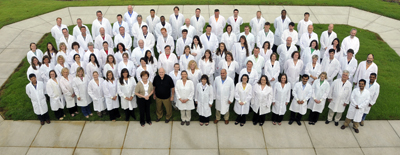 The Shaws with Avanti employees.
Image courtesy of Walter Shaw.
The Shaws with Avanti employees.
Image courtesy of Walter Shaw.
The Shaws and Burgess say they are constantly exploring the next frontiers in lipid research. For example, on the side of the research-grade lipid products, the company is working on biologically active lipids, which are emerging as important molecules in cell function. On the pharmaceutical side, the company is exploring the use of lipids as bioactive ingredients in analgesics and anti-inflammatory agents. Since 2003, Avanti has been a licensed supplier of mass spectrometry lipid standards for the multi-institutional initiative called LIPID Metabolites and Pathways Strategy, or LIPID MAPS for short. LIPID MAPS aims to identify and quantitate the majority of lipids in mammalian cells, as well as to quantitate the changes in them in response to environmental and chemical signals.
In telling the story of how Avanti grew into the company it is today, Walter Shaw reflects on the moments that seem insignificant but change life’s course: “Just think, if this brother and sister born of incest hadn’t shown up in the emergency room with stomach cramps, we would have never had their blood to do the study. If I hadn’t been working on the blood of burn victims, went to Cleveland and called up Grand Island Biological, who knows what I would have been doing?”
But Shaw pays the biggest tribute to the moment when he treated a woman to a hamburger. He says, “If I hadn’t married Rowena, I can’t imagine where life would have taken me.”
Enjoy reading ASBMB Today?
Become a member to receive the print edition four times a year and the digital edition monthly.
Learn moreGet the latest from ASBMB Today
Enter your email address, and we’ll send you a weekly email with recent articles, interviews and more.
Latest in Industry
Industry highlights or most popular articles
How Alixorexton could transform narcolepsy treatment
A new investigational drug, alixorexton, targets the brain’s orexin system to restore wakefulness in people with narcolepsy type 1. Alkermes chemist Brian Raymer shares how molecular modeling turned a lab idea into a promising phase 3 therapy.

Inside industry postdocs
As more Ph.D. scientists look beyond academia, industry postdocs offer a new kind of training, where mentorship meets mission-driven research. Fellows at Pfizer and Genentech share how these programs prepare them to translate discovery into impact.
Black excellence in biotech: Shaping the future of an industry
This Black History Month, we highlight the impact of DEI initiatives, trailblazing scientists and industry leaders working to create a more inclusive and scientific community. Discover how you can be part of the movement.
Attend ASBMB’s career and education fair
Attending the ASBMB career and education fair is a great way to explore new opportunities, make valuable connections and gain insights into potential career paths.
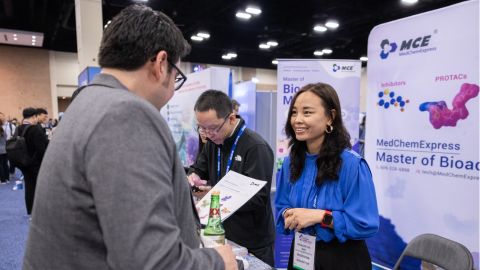
Benefits of attending a large scientific conference
Researchers have a lot of choices when it comes to conferences and symposia. A large conference like the ASBMB Annual Meeting offers myriad opportunities, such as poster sessions, top research talks, social events, workshops, vendor booths and more.
Biotech startup worms its way into therapeutics
Andrea Choe's company, Holoclara, has created an anti-inflammatory drug based on a molecule from worms.