
The man behind the Western blot: W. Neal Burnette
Thirty-one years ago, W. Neal Burnette published a paper that described a technique called Western blotting (1). The paper initially was rejected by the journal Analytical Biochemistry, but it went viral among molecular biologists as a preprint. Eventually the journal agreed to publish the paper, which now has been cited more than 6,000 times. Because Burnette didn’t bestow his name on the blot, it’s likely that the current generation of investigators don’t know he was involved in developing the technique that is now ubiquitous in molecular biology and biochemistry research laboratories and used as a clinical diagnostic for HIV-AIDS.
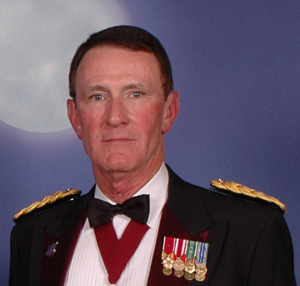 |
| W. Neal Burnette retired in 2005 as a colonel in the U.S. Army after serving 35 years in various positions. Photos courtesy of Burnette. |
Burnette’s story is an unusual one: After a quick dip into acting school after high school, he went through the academic training mill. In the early 1980s, he went to work for a then-small biotechnology company. At the same time, Burnette served his country for 35 years, in both reserve and active duty, as a U.S. Army officer, a field medic and an infectious diseases expert.
Early years
Born in 1944 in New York state, Burnette traveled with his family all over the U.S. and Japan while his father served in the U.S. Air Force. Burnette wanted to be a military pilot like his father, who was a bomber pilot during World War II and a fighter pilot during the Korean war, but his bad eyesight put an end to that dream. He was very much interested in science, but, in his junior year of high school, his mother encouraged him to take speech and drama classes after he got injured during football spring training. Burnette says he became “a starry-eyed kid who wanted to be an actor.”
As a senior in a Texas high school, Burnette acted in the lead role of King Creon in a production of Jean Anouilh’s “Antigone,” which won him and his school theater awards from the state. The award led to a theater scholarship from Texas Christian University. “I went to college to study theater and ballet,” he says. “But my then-girlfriend, and now wife, convinced me to change course.” Aware of Burnette’s interest in science, she told Burnette she would marry him only if he went into science.
Burnette heeded her. “I lost my theater scholarship. I worked 48 hours a week as a surgical scrub” to make ends meet, recalls Burnette. “It was tough getting through school.”
With mentorship from his organic chemistry professor, Manfred Reinecke, Burnette graduated with two bachelor’s degrees, one in biology and the other in chemistry. He then got a master’s degree in bio-organic chemistry at the University of Central Missouri, a location chosen partly because his father was teaching there. He then went to Vanderbilt University to work toward a Ph.D. thesis on RNA tumor viruses (now called retroviruses) under the guidance of William Mitchell. This was followed by a postdoctoral stint with J. Thomas August, who was at that time at the Albert Einstein College of Medicine, where Burnette honed his skills in SDS-PAGE and radioimmunoassays.
Going west
At the end of 1977, Burnette took on another postdoctoral fellowship with Robert Nowinski at the Fred Hutchinson Cancer Research Center in Seattle. Nowinski, who went on to become the founder of the biotechnology company ContraFect, describes Burnette as an “eager and enthusiastic” postdoctoral fellow who worked fairly independently.
Nowinski’s group was prominent in the retrovirology field and was engrossed in the analysis of antigenic epitopes of retroviral structural proteins. But they were using tedious chromatographic separations and radioimmunoassays to probe each individual protein of the viral capsid with a series of antibodies. Burnette offered to find a way to speed up the process so that all the proteins in a viral capsid could be tested with an antibody in a single shot. “When you ask a carpenter to do something, the tool he’s always going to use is a hammer,” says Burnette. “My tools were SDS-polyacrylamide gels and immunoassays.”
The main development of the technique took Burnette two weeks in 1979 followed by a few more weeks of tweaking. One of the major problems Burnette had to grapple with was how to get antibodies to bind to proteins that were separated in the polymer matrix of a gel. But in a moment of inspiration, he realized that, just like the DNA and RNA blots that were all the rage at the time, he could make a replica of the gel-resolved proteins and use the replica for the immunoassay.
DNA blotting was called Southern blotting after its inventor, Edwin Southern at Oxford University (2). RNA blotting, developed in 1977, was called “Northern blotting” by James Alwine, David Kemp and George Stark at Stanford University as a play on Southern blotting (3). During a quick chat, Nowinski and Burnette decided to continue the directional joke. They dubbed Burnette’s method “Western blotting” simply because the laboratory was located on the West Coast.
As Burnette was developing his technique, a paper appeared in Proceedings of the National Academy of Sciences that described a similar approach (4). But Burnette was convinced that his method made it easier to transfer the proteins from gel to membrane, get antibody detection and analyze the blot. So he began to put together a manuscript. At this point, Nowinski says he told Burnette, “I didn’t think it would be appropriate for me to come on the paper as an author, because it was really all his work.”
When Burnette, the sole author of the manuscript, sent his work to Analytical Biochemistry, it was promptly rejected. The rejection wasn’t because of the method’s similarity to the technique in the PNAS paper but because it seemed pedestrian, and one reviewer had taken particular offense to the whimsical name.
On receiving the rejection, “I thought, ‘What the heck,’ and didn’t pay much attention,” says Burnette. But he had given preprints of the paper to his friends. They photocopied the paper and gave it to their friends, who repeated the process. “Pretty soon, I was running a daily seminar on blotting by telephone. I was talking to everyone on the planet who was trying to reach me because they couldn’t read the Xeroxed copy they had,” says Burnette. “I had moved to the Salk Institute from Fred Hutchinson by then. [Western blotting] was taking up all my time by talking on the phone.”
Frustrated, Burnette called back the editors of Analytical Biochemistry. “I told them, ‘This is crazy. Everybody knows about this technique now that I’ve not published for two years. You think you might like to publish it now?’” The journal at this point agreed and published the paper in 1981. “Then I got deluged with reprint requests!” says Burnette.
Burnette really had not thought much more about the paper between its acceptance and publication. “I just wanted another publication on my CV. What I didn’t realize [was] that it would be cited so many times that it would be cited orders of magnitude more than all my other papers put together!” Nowinski says had he or Burnette had any inkling of the paper’s impact, they would have handled the paper more deliberately.
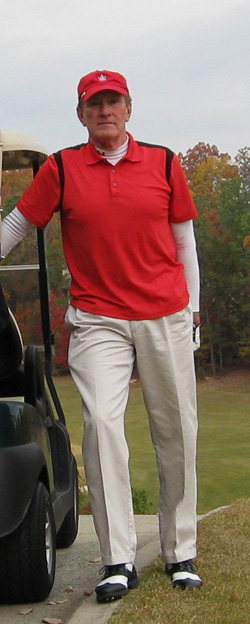 |
| Burnette is now an avid golfer. |
Academia to industry
By now, Burnette was at the Salk Institute as a research associate. Biotechnology companies were starting to pop up, and someone suggested to Burnette that he check out a tiny company in Thousand Oaks, Calif. Burnette interviewed with the company and landed a job that doubled his salary, offered something called stock, and made him one of the company’s earliest employees. The company was initially called Applied Molecular Genetics but soon became famous as Amgen when it released its blockbuster drugs Epogen and Neupogen for treating anemia in the 1980s.
Burnette was given independence to pursue his own research interests in recombinant vaccines. He led programs that resulted in the first experimental recombinant vaccines for hepatitis B, pertussis, cholera and a number of animal infectious diseases. “The best work I ever did was on developing what I call genetic toxoids,” he says. These toxoids are versions of the toxins produced by pathogenic bacteria. “I could make very selective site-specific substitutions within certain subunits of these multimeric toxins and inactivate toxic activities but allow them to retain their immunogenic properties so they could be used” for vaccine development, Burnette explains. “I enjoyed doing that work at Amgen, but Amgen really didn’t care about it. They had Epogen and some other big money-makers, and vaccines weren’t thought to be big money-makers.”
Burnette left Amgen in 1992. Thanks to the stock options he had received when he signed on at Amgen, Burnette now was at a point where he “didn’t need to work too hard.” He went on to become a director and executive of a number of smaller biomedical companies but “none of that was very successful.”
Military career
Despite not getting to be a military pilot, Burnette still served his country over the course of 35 years. Burnette joined the army reserves in the 1970s and went on active duty periodically. But his biggest contribution to national security came after 9/11. In 2001, at the age of 57, Burnette was mobilized for active duty as an infectious diseases specialist. He developed the first quantitative algorithm that assessed the threats of indigenous infectious diseases to military operations in regions around the world. He was an adviser to the chemical and biological defense program at the Pentagon. Among other things, Burnette was responsible for the acquisition of smallpox and anthrax vaccines for protecting the U.S. and allied forces against bioterror threats.
But the military also gave Burnette a chance to make something like a full circle to his childhood dreams of movies and Hollywood. Between 2004 and 2005, he served at a U.S. Army Reserve public affairs unit in Los Angeles. The unit helped screenwriters and TV and film producers create movies with greater military authenticity. “We often read scripts and commented on them to help” filmmakers understand how the military worked, says Burnette. “We got a lot of goofy scripts!”
Enjoying life to a tee
Burnette retired from the army in 2005 as a colonel. He now lives with his wife in Chapel Hill, N.C., on a property that has a Jack Nicklaus-designed golf course in its back yard. Burnette flies airplanes as a licensed commercial pilot, feeds his golf addiction (he plays, by his own admission, “terribly”) and occasionally consults for biotechnology companies.
For a man who’s worn many hats, he sounds wistful when talking about research, something he hasn’t done since he left Amgen. “I had the best time when I worked at the bench, filling a pipette,” he says. “I think that’s when I was most effective.”
Of the status of the Western blot today, he says, “I am happy to have done it and made a contribution to science that everybody uses. I could have never imagined that I would have my 15 minutes of fame last this long.”
References
- Burnette, W. N. “Western blotting”: electrophoretic transfer of proteins from sodium dodecyl sulfate–polyacrylamide gels to unmodified nitrocellulose and radiographic detection with antibody and radioiodinated protein A. 1981) Anal. Biochem. 112, 195 – 203.
- Southern, E. M. Detection of specific sequences among DNA fragments separated by gel electrophoresis. (1975) J. Mol. Biol. 98, 503 – 517.
- Alwine, J. C., Kemp, D. J., and Stark, G. R. Method for detection of specific RNAs in agarose gels by transfer to diazobenzyloxymethyl-paper and hybridization with DNA probes. Proc. Natl. Acad. Sci. U.S.A. (1977) 74, 5350 – 5354.
- Towbin, H., Staehelin, T., and Gordon, J. Electrophoretic transfer of proteins from polyacrylamide gels to nitrocellulose sheets: procedure and some applications. (1979) Proc. Natl. Acad. Sci. U.S.A. 76, 4350 – 4354.
The men behind Western blotting

In the January 2012 issue of ASBMB Today, I profiled American Society for Biochemistry and Molecular Biology member W. Neal Burnette, describing him as the man who developed Western blotting (above) (1). In doing so, I might have inadvertently given some readers the impression that Burnette was the only person who worked on protein immunoblotting. But it’s critical to note that two other groups had made important contributions to the technique in the late 1970s and published their findings before Burnette was able to do so.
George Stark, now at the Cleveland Clinic but then at Stanford University, and his colleagues published the first paper that described the transfer of proteins by capillary action from a polyacrylamide/agarose gel with or without the denaturing agent SDS onto a special membrane called diazobenzyloxymethyl-paper (2). The membrane is called DBM-paper for short. Stark’s group was already famous for developing the RNA blotting technique known as “Northern blotting” (3). The name was a joke based on the DNA blotting technique called “Southern blotting,” which was named after its inventor, Edwin Southern at Oxford University (4). It was for Northern blotting, Stark explains, that his laboratory became experts in making DBM-paper. In 1975, Stark’s group had described how to make chemically reactive cellulose that would covalently bind to DNA and RNA (5). This powdered cellulose could be used to isolate complementary nucleic acids by hybridization. This chemistry was the basis for Northern blotting, but Stark’s group used paper rather than powdered cellulose for the method.
“Following on from that, we soon realized that there was a problem in detecting specific proteins,” says Stark. They used the same chemistry as for Northern blotting, because they realized DBM-paper reacted with both nucleic acids and proteins. When the proteins transferred out of the gel, they covalently bound to the DBM-paper. “The surprise bit was that the immobilized protein reacted so nicely and specifically with antibodies,” notes Stark. They submitted a description of their method to the Proceedings of the National Academy of Sciences in April 1979, and the paper appeared in July.
Meanwhile, over in Europe, Harry Towbin was a postdoctoral fellow in the laboratory of Julian Gordon at the Friedrich Miescher Institute for Biomedical Research in Switzerland. Like Burnette, Towbin was dealing with an analysis problem in his research project, which focused on making antibodies against ribosomes for structure-function studies (6). Towbin’s problem was much like Burnette’s: Both were trying to figure out the specificity of antibodies against proteins in complex macromolecular structures but realized they didn’t have an easy and reliable biochemical tool for the analysis.
Unaware of the work being done by Stark’s group, Towbin and Gordon, along with Theophil Staehelin at Roche, began to work out a method that would allow them to establish which antibody bound to which component of the ribosomal complex. By that point, DNA and RNA blotting methods were popular, so the idea of transferring proteins out of a gel and onto a membrane seemed natural. “It was in the air!” says Towbin, who is now set to retire from the Swiss Federal Institute of Technology Zurich in April.
He says they knew that proteins, but not RNA, bound to nitrocellulose, so they separated ribosomal proteins on a polyacrylamide gel with urea as a denaturing agent and then electrophoretically transferred them onto nitrocellulose. The proteins noncovalently clung to the nitrocellulose, but RNA didn’t; this feature nicely eliminated the nucleic acid from the proteins. Although they primarily focused on gels with urea as the denaturing agent, Towbin says they also got their approach to work with SDS.
 Burnette
  Stark
Stark  Towbin
The Gordon group submitted a description of their method to the Proceedings of the National Academy of Science in June 1979, which appeared in the journal in September (7). The timing of the publications was such that the two groups were unaware of each other’s work until publication.
Stark says his own lab became nitrocellulose converts once appropriate nitrocellulose membranes became commercially available. DBM-paper, which has to be made chemically active prior to immunoblotting, “is not as convenient as just picking up a piece of paper out of a package and blotting directly onto it,” he says. “There is no question that blotting onto the appropriate derivatives of nitrocellulose was the way to go.”
Burnette was unaware of the work done by the two groups as he was developing his approach but saw the Stark and Gordon groups’ papers in print while he was preparing his manuscript. But he felt that his method was different enough to press ahead. He focused on electrophoretically transferring proteins out of SDS-polyacrylamide gels onto nitrocellulose in a more quantitative manner. When Burnette finally got his paper published, he called the approach “Western blotting” in the title and explained the rationale for the name at the end of the introduction (8). For this reason, Burnette is credited for giving protein immunoblotting its nickname (9).
But Stark says his group was calling its method by the same name well before the Burnette paper showed up, although they never used it in their publication. It was completely logical for both Stark and Burnette to come up with the same name: Both were located at research institutions on the West Coast, and the directional joke of blotting was well known by that point (researchers later referred to blotting of post-translational modifications, such as lipids and sugars, as “Eastern blotting”).
The three men have said that they were surprised by the method’s success and longevity. Indeed, apart from changes in detection methods and other tweaks, the method’s principle has persisted unchanged since the 1970s (10).
Towbin is especially amused by how the passage of time has erased the memory of the hard work that went into developing the ubiquitous biochemical tool. “The younger generation of biologists takes the method for granted!” he chuckles.
References
- Mukhopadhyay, R. W. Neal Burnette: the man behind the Western blot. ASBMB Today, January 2012:17 – 19.
- Renart, J.; Reiser, J.; and Stark, G. Transfer of proteins from gels to diazobenzyloxymethyl-paper and detection with antisera: a method for studying antibody specificity and antigen structure. Proc. Natl. Acad. Sci. USA. 1979; 76:3116 – 3120.
- Alwine, J.C.; Kemp, D.J.; and Stark, G. Method for detection of specific RNAs in agarose gels by transfer to diazobenzyloxymethyl-paper and hybridization with DNA probes. Proc. Natl. Acad. Sci. USA. 1977;74:5350 – 5354.
- Southern, E.M. Detection of specific sequences among DNA fragments separated by gel electrophoresis. J. Mol. Biol. 1975;98:503 – 517.
- Noyes, B.E., and Stark, G. Nucleic acid hybridization using DNA covalently coupled to cellulose. Cell, 1975; Volume 5:301 – 310.
- Towbin, H. Origins of protein blotting Biji T. Kurien and R. Hal Scofield (eds.), Methods in Molecular Biology, Protein Blotting and Detection, vol. 536 Humana Press, a part of Springer Science & Business Media, LLC, 2009.
- Towbin, H.; Staehelin, T.; and Gordon, J. Electrophoretic transfer of proteins from polyacrylamide gels to nitrocellulose sheets: procedure and some applications. Proc. Natl. Acad. Sci. USA 1979;76:4350 – 4354.
- Burnette, W.N. “Western blotting”: electrophoretic transfer of proteins from sodium dodecyl sulfate-polyacrylamide gels to unmodified nitrocellulose and radiographic detection with antibody and radioiodinated protein A. Anal. Biochem. 1981;112:195 – 203.
- Eisenstein, M. A look back: westward expansion. Nature Meth. 2005;2:796.
- Mukhopadhyay, R. Revamping the Western blot. ASBMB Today. January 2012:14 – 16.
Enjoy reading ASBMB Today?
Become a member to receive the print edition four times a year and the digital edition monthly.
Learn moreGet the latest from ASBMB Today
Enter your email address, and we’ll send you a weekly email with recent articles, interviews and more.
Latest in People
People highlights or most popular articles

Learning, leading and lifting others
Tigist Tamir’s journey from aspiring astronaut in Ethiopia to cancer researcher at the University of North Carolina highlights the power of mentorship, persistence and curiosity in shaping a scientific career focused on discovery and equity.

Biochemists and molecular biologists sweep major 2025 honors
Recent Nobel, MacArthur and Kimberly Prize honorees highlight the power of biochemistry and molecular biology to drive discovery, including immune tolerance, vaccine design and metabolic disease, and to advance medicine and improve human health.

Subramanian receives electron microscopy honor
He delivered remarks at the International Conference on Electron Microscopy in Bangalore, India.

Bioart for fall: From order to disorder
The cover of the fall issue of ASBMB Today was created by ASBMB member, Soutick Saha, a bioinformatics developer at Wolfram Alpha LLC.

Doudna wins Priestley Medal
She will receive a $20,000 research grant and will formally accept the honor at the ACS Spring 2026 conference.

In memoriam: David Baltimore
He was a Nobel laureate, president emeritus at the California Institute of Technology and an ASBMB member for more than 50 years.