
It's about time
Our concept of time is dictated, at least in part, by how we spend our days. For those who work in academia, the year is shaped by the cycle of semesters and vacations that make up a school calendar, and days might include set hours for teaching, study, writing and research.
When I was home taking care of infant children, I lived very much in the moment, and many moments dragged interminably. My sleep-deprived brain seldom could look beyond the next feeding or diaper change. Toilet training and teething were processes that took months but seemed to go on for years. Yet when my children went off to elementary school, it had all passed in a flash.
For a couple of years, I had a job as an administrator in an Episcopal church. Many of my tasks, such as newsletters and bulletins, had weekly or monthly deadlines, but hovering overhead was the great cycle of the liturgical year with its ancient rituals. The feast of Pentecost might fall in May, but January wasn’t too early to start planning.
When I worked at a daily newspaper, we had a 24-hour cycle that reset every night as soon as the next day’s issue landed in the press room. We all liked working on long-term projects, but every day we had to feed the beast — and that was the schedule that drove us. The advent of 24-hour online news only made the pace more frantic.
As managing editor of this magazine, I have gone back to looking many months into the future. We spend a fair bit of time planning our feature stories and special issues, and we also need to keep in mind the calendar of the American Society for Biochemistry and Molecular Biology — the hub of which is the annual meeting.
Here at ASBMB central, we constantly think and talk about the society’s biggest event; the next annual meeting is forever looming, even the day after the last one ends. We aim to include annual meeting information in almost every issue of ASBMB Today — because it’s that important.
This month, we profile the 12 fascinating people who have been named recipients of the ASBMB’s annual awards and will speak at the 2020 annual meeting in San Diego. In the past, we’ve profiled award winners right before the meeting; here, we’re trying something new. The 2020 meeting may be five months away, but once you’ve read about these researchers — their lives and their science — I think you’ll want to register right away.
Depending on the pace of your life right now, those five months could just fly by.
Enjoy reading ASBMB Today?
Become a member to receive the print edition four times a year and the digital edition monthly.
Learn moreGet the latest from ASBMB Today
Enter your email address, and we’ll send you a weekly email with recent articles, interviews and more.
Latest in Opinions
Opinions highlights or most popular articles
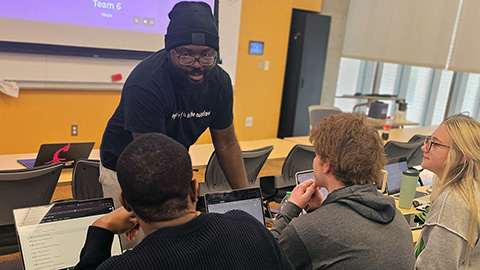
Learning can be fun: Gaming anatomy and physiology
Instructors explore how gamification and active learning transform student engagement and retention. They convey how emotion, interaction and design can make even rigorous subjects more effective and memorable.
Mentorship and uncertainty: Lessons from Telemachus
A biochemistry educator reflects on mentorship through the Greek story of Telemachus, showing how embracing uncertainty, failure and curiosity can transform teaching.
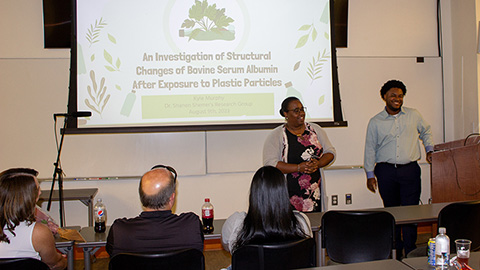
Embracing the twists and turns along the educator pathway
A biochemistry educator reflects on the challenges of early faculty life, describing how evidence-based teaching, cross-disciplinary collaboration and classroom challenges shaped her growth.
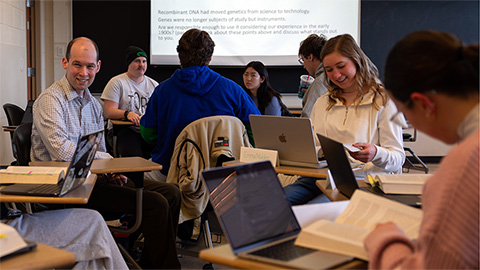
Redesigning with students in mind
Assistant professor reflects on how the shift to online teaching revealed gaps in points-based grading and led to a redesign centered on transparency and student growth.
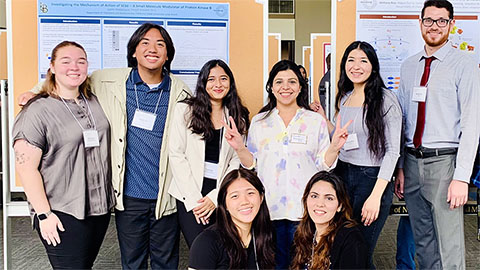
Teaching beyond information transfer
Educator reflects on moving beyond lectures to create a biochemistry classroom centered on engagement, transparency and student ownership, showing how small shifts like “student hours” and active learning can transform understanding.
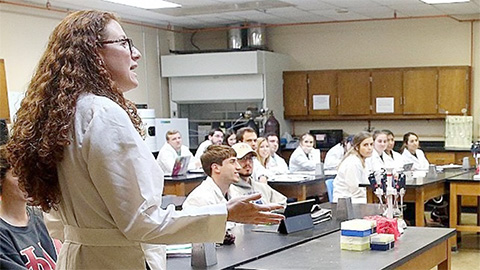
Mayday! Lessons from cellular dysfunction and group work dynamics
An upper-level biology course revealed that strong science doesn’t guarantee strong teamwork. One instructor shares how failed group dynamics reshaped their approach, leading to more structured, collaborative and effective student learning.