
Winding path leads to plant enzyme breakthrough
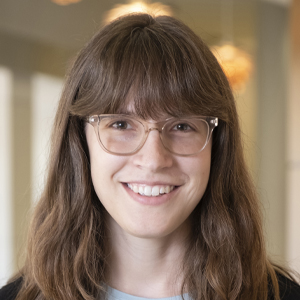
After finishing high school in Singapore, where she grew up, Manajit Hayer–Hartl trained as a teacher because, she said, “Most educated women in those days in Singapore ended up being teachers.”
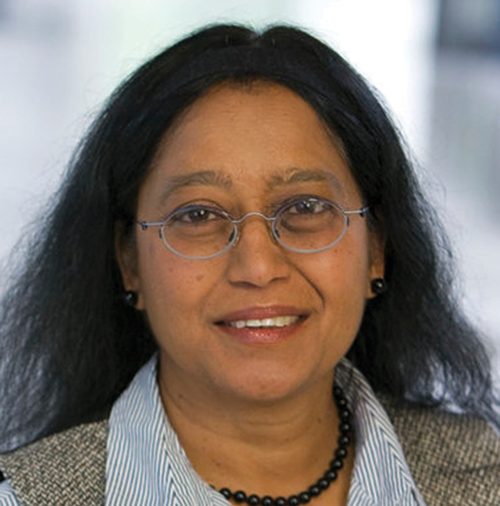
Manajit Hayer–Hartl
She lasted about a year before realizing that she didn’t want to read the science her 14-year-old students read; she wanted new, exciting science. So she applied to a chemistry Ph.D. course in Scotland. It wasn’t what her parents had in mind, but “my parents couldn’t really stop me since I wasn’t relying on (them) for funding,” she said.
“I can laugh about it now, but 40 years ago you really had to fight against the system.”
Her fight paid off with a distinguished career and, most recently, the American Society for Biochemistry and Molecular Biology’s 2020/2021 ASBMB–Merck Award for research in biochemistry and molecular biology.
After her Ph.D. and postdoc, Hayer–Hartl met her future husband, Ulrich Hartl, at a meeting in Greece. He wanted to move to the U.S., and “I’m a nice wife so I went along,” she said. She worked in his protein folding lab in New York, which led to some new experiences.
“I’d never run a gel in my life,” she said. Others in the lab were unfamiliar with her chemistry skills. It was a great melding of knowledge. When the couple moved to the Max Planck Institute of Biochemistry, Hayer–Hartl worked independently in her husband’s lab.
With the goal of studying how the photosynthesis enzyme RuBisCo is synthesized in plant cells, in 2006 Hayer–Hartl became the leader of her own research group at Max Planck. She was the first person to synthesize plant RuBisCo in Escherichia coli and firmly established herself as the leading expert on RuBisCo biogenesis. This work not only earned her the respect of colleagues across fields from plant biology to biochemistry but brings her daily joy.
“Every day I learn something new,” she said. “This is where I find the greatest satisfaction.”
Synthesizing plant RuBisCo in E. coli for the first time
RuBisCo is the most abundant protein on Earth; all biomass depends on its function, because plants need it to incorporate carbon dioxide into glucose. But RuBisCo is inefficient. About 25% of the time, it incorporates oxygen instead of CO2, effectively wasting the enzyme’s function, and this has a direct effect on crop yield.
Researchers have the skills to do mutagenesis and screen proteins for optimal function, but they could not do this with RuBisCo, because no one was able to synthesize the enzyme from plants in the lab; its assembly of eight large subunits and eight small subunits was too complicated.
Manajit Hayer–Hartl and her lab team solved this problem when they found the factors that help plant RuBisCo fold and assemble. In addition to the chaperone system that includes Cpn60/Cpn20, there are four other required factors: Raf1 and 2, RbcX, and Bsd2. Each of these proteins acts at different stages: Some help with folding, some help stabilize the folded form and some assemble the whole hexadecameric complex.
When Hayer–Hartl’s lab expressed these factors in E. coli along with the components of RuBisCo, for the first time scientists were able to synthesize plant RuBisCo outside of chloroplasts, a huge step for optimizing its function.
Enjoy reading ASBMB Today?
Become a member to receive the print edition four times a year and the digital edition monthly.
Learn moreGet the latest from ASBMB Today
Enter your email address, and we’ll send you a weekly email with recent articles, interviews and more.
Latest in People
People highlights or most popular articles
de la Fuente honored for AI research
The award will support the development of an AI system called ApexMol, a 3D structure–informed, agentic large language model designed to create new biomolecules.
In memoriam: Peter Roepstorff
He was a leading researcher in biological mass spectrometry, mapped protein function in living organisms and was an ASBMB member for 19 years.
Flipping lipids and slime molds
A dull first job nearly pushed JBC associate editor Todd Graham out of science. Then a slime mold project changed his path. Now, he studies membrane biology and reflects on discovery, persistence and mentoring through uncertainty.
ASBMB members receive RNA Society awards
The RNA Society awards Brenda Bass, Can Cenik and Karin Musier–Forsyth for their achievements in RNA research and innovation. Winners will be recognized at the closing awards ceremony of the RNA 2026 annual meeting.
In memoriam: Richard L. Cross
He studied the enzymatic mechanisms of ATP synthase and served on the editorial board of the Journal of Biological Chemistry for 24 years.
A chance encounter with the lab
Payton Stevens never planned to become a pancreatic cancer researcher. A temporary job set him on a path from rural Kentucky to leading research on Wnt signaling and metastasis, where he now pairs discovery with mentorship and science advocacy.