
Want real peer review? Publish in society journals

Peer Review Week (Sept. 16–20) is organized by a committee of 40 people from 29 scientific and publishing organizations worldwide. This year’s theme is “Quality in Peer Review.” The American Society for Biochemistry and Molecular Biology supports these efforts to highlight the importance of peer review by encouraging all ASBMB journal editors, associate editors and editorial board members to participate in events and activities that highlight the critical role peer review plays in the advancement of science.
Merriam–Webster defines peer review as “a process by which a scholarly work (such as a paper or a research proposal) is checked by a group of experts in the same field to make sure it meets the necessary standards before it is published or accepted.” Careful review of manuscripts by qualified experts in the same area of science is essential to ensure that the published literature is kept to high standards of accuracy, rigor and reproducibility. Without rigorous peer-review processes, the scientific literature rapidly would be filled with “fake news.” The ultimate purpose of peer review is to maintain the integrity of science by preventing the publication of invalid or poor-quality articles, including those that do not present novel findings.
Careful peer review by experts in your specific area of research is one of many reasons why we all should be reviewing for and publishing in nonprofit society-supported journals, such as those published by the ASBMB. Society journals do not have gatekeepers who are not practicing scientists; manuscripts are assigned to board members and reviewed by active scientists with research laboratories in the same areas as the submissions.
Society journals decide whether to publish a paper based on the quality of the science and its contribution to advancing a field. They do not base decisions to publish on whether a manuscript is newsworthy, a euphemism for “How will it affect our impact factor?”
In addition, any funds generated by a society journal go back directly to supporting science, as travel awards for young people to attend national meetings, education programs and advocacy for government funding of science. For-profit journals make money for their stockholders and do little to support the science community.
As we celebrate and extol the importance of peer review this month, remember this: If you want your articles to be reviewed by your peers, you should submit your papers to nonprofit society-supported journals.
Enjoy reading ASBMB Today?
Become a member to receive the print edition four times a year and the digital edition monthly.
Learn moreGet the latest from ASBMB Today
Enter your email address, and we’ll send you a weekly email with recent articles, interviews and more.
Latest in Opinions
Opinions highlights or most popular articles
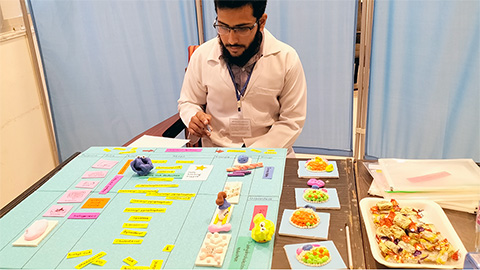
When biochemistry stopped being scary
Professor challenges the idea that biochemistry must feel abstract by designing hands-on models and games that turn fear into curiosity, transforming classrooms across Pakistan into spaces for experimentation and shared discovery.
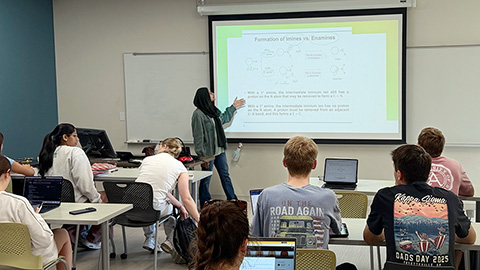
Listening first: The moment that reshaped my teaching
Educator recounts how a single student comment reshaped her teaching, leading her to replace lectures with question-driven, collaborative learning and rethink AI as a tool for deeper engagement and understanding.
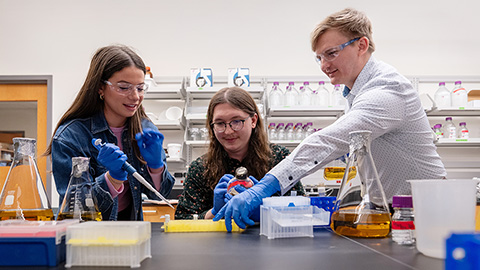
Getting students excited about introductory biology
Assistant professor rethinks how he teaches foundational biology by flipping his classroom and using real-world case studies to help students connect molecular mechanisms to lived experiences.
Backward design and beyond: Lessons from a molecular genetics classroom
Associate professor reflects on an early teaching misstep and explains how backward design, clear learning objectives and reflective tools reshaped assessment, clarified expectations and helped students take ownership of their learning.
Women’s health cannot leave rare diseases behind
A physician living with lymphangioleiomyomatosis and a basic scientist explain why patient-driven, trial-ready research is essential to turning momentum into meaningful progress.
Making my spicy brain work for me
Researcher Reid Blanchett reflects on her journey navigating mental health struggles through graduate school. She found a new path in bioinformatics, proving that science can be flexible, forgiving and full of second chances.