
Ion channel researcher receives Tabor award from journal
Voltage-gated calcium and sodium channels are involved in numerous biological processes. Sodium channels support fast propagation of electrical impulses. Calcium channels, in response to the electrical impulses, convey calcium ions into cells, and this can have different effects based on the type of cell. One effect is changes in gene expression in both neuronal and cardiac cells, which is mediated by the influx of calcium and a variety of down-stream partners. The molecular properties of both channels are fine-tuned by a number of proteins, allowing them to perform their wide-ranging biological roles.
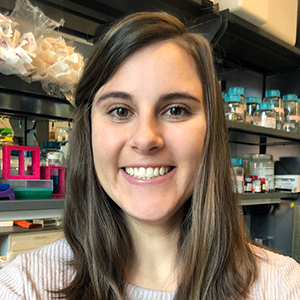
 Manu Ben–Johny won a 2017 Journal of Biological Chemistry/Herb Tabor Young Investigator Award during the Federation of American Societies for Experimental Biology’s 2017 Conference on Ion Channel Regulation. courtesy of manu ben–johny
Manu Ben–Johny, a postdoctoral researcher at Johns Hopkins University, has been researching the molecular and biophysical properties involved in channel fine-tuning, leading to insights into how channel dysfunction may be involved in specific diseases and how synthetic proteins could be used to modulate channel function in a specific manner. For his work, Ben–Johny won a 2017 Journal of Biological Chemistry/Herb Tabor Young Investigator Award. “I am truly humbled to receive such an honor from the American Society for Biochemistry and Molecular Biology,” Ben–Johny said. “The young investigator awards are an important way to encourage, inspire and promote creativity and scientific rigor in young scientists.”
The award honors Herb Tabor’s contributions to science and recognizes innovative new researchers who exemplify scientific creativity. Ben–Johny was selected by a panel of three experts during the Federation of American Societies for Experimental Biology 2017 Conference on Ion Channel Regulation. “The quality of his poster was outstanding,” said Robert Colbran, a member of the panel. “He presented the poster with great enthusiasm, displaying an outstanding depth of knowledge in responding to questions.”
Ben–Johny began his graduate studies at Johns Hopkins with the goal of engineering medical devices. However, his focus changed after meeting his eventual graduate studies mentor, the late David T. Yue. “He spoke elegantly about the voltage-gated calcium ion channel as though it were an electrical device,” Ben–Johny said. “Instead of building devices, I got to apply the same quantitative thinking to unravel deep mysteries about ion channels and their molecular mechanisms.”
Related Papers
Conservation of Ca2+/calmodulin regulation across Na and Ca2+ channels.
Calmodulin regulation (calmodulation) of voltage-gated calcium channels.
Ben–Johny stayed at Johns Hopkins for his postdoctoral studies to continue his research on voltage-gated calcium and sodium channels, including how the calcium-binding protein calmodulin, or CaM, is involved in tuning channel function. He and colleagues have described a mechanism by which CaM signaling to the two ion channels is selectively silenced by different proteins, providing insights into how aberrant signaling may lead to disease.
Ben–Johny’s current research focuses on the interplay of ion channels, CaM/calcium modulation and disease. Calcium channel misregulation has been implicated in human diseases, including cardiac and neurological disorders. “Resolving these pathogenic mechanisms and devising novel strategies to rescue channel function in the context of disease is critical and a worthy endeavor,” Ben–Johny said.
This year Ben–Johny will become an assistant professor at Columbia University, where he plans to continue his research on calcium-regulated ion channels and disease. “As I embark on this new leg of my scientific journey,” he said, “the incredible accomplishments of Herb Tabor both scientifically and in terms of enriching the scientific community serve as an exemplar in my own journey.”
The Tabor award is changing
The selection process for the Journal of Biological Chemistry/Herb Tabor Young Investigator Award will change in 2018. A panel of JBC associate editors will select a handful of first authors on JBC papers for the award. The winners will be invited to give short talks at the annual meeting of the American Society for Biochemistry and Molecular Biology. To recommend a first author for the award, contact JBC Associate Editor George DeMartino.Enjoy reading ASBMB Today?
Become a member to receive the print edition four times a year and the digital edition monthly.
Learn moreGet the latest from ASBMB Today
Enter your email address, and we’ll send you a weekly email with recent articles, interviews and more.
Latest in People
People highlights or most popular articles
Kimble honored for lifetime achievement in genetics
She received the 2026 Thomas Hunt Morgan Medal and will be honored with a dedicated online profile and seminar.
Janetka named distinguished professor
Washington University awarded him the inaugural Carl Frieden Distinguished Professorship.
ASBMB members receive ASPET awards
The American Society for Pharmacology and Experimental Therapeutics awards Simone Brixius–Anderko, Paul Insel, Sudarshan Rajagopal, Emily Scott, Alan Smrcka and Jürgen Wess for their excellent research and mentoring work in pharmacology.
Kozul honored by Washington University
She received the 2025 Elliot L. Elson Education and Training Award.
de la Fuente honored for AI research
The award will support the development of an AI system called ApexMol, a 3D structure–informed, agentic large language model designed to create new biomolecules.
In memoriam: Peter Roepstorff
He was a leading researcher in biological mass spectrometry, mapped protein function in living organisms and was an ASBMB member for 19 years.