
MCP: How exercise works its biomolecular wonders

Exercise has long been known to benefit the entire body, from burning fat and strengthening muscles to boosting the immune system and reducing the risk of some cancers. To understand how some of these effects are controlled on a cellular level, researchers at the University of Sydney did a proteomic analysis of the swarm of peptides and small-protein hormones that circulate throughout the body in blood plasma.

Benjamin Parker, the first author on the paper published in Molecular & Cellular Proteomics, said, “There’s a big push in the field to identify secreted factors that allow organs to communicate with each other, and this might enable them to adapt to certain environmental stresses … like exercise.” The researchers ultimately hope that their novel combination of techniques for proteomic analysis might be used to pinpoint the factors behind certain health benefits for potential drug development.
Parker and colleagues used a combination of tagging and fragmentation techniques, multidimensional liquid chromatography and tandem mass spectrometry to identify 5,548 peptides in the peptidome, the aggregate of peptide molecules that circulate in the plasma with blood cells. They found that the levels of the circulating small molecules were modulated rapidly during and after exercise through a network of post-translational modifications and proteases.
“We know that when we exercise, there will be certain factors and hormones that get released into our body, into our bloodstream, that then enable different tissues to adapt to that increased workload,” Parker said. While the researchers noted expected elevated levels of hormones, including insulin and the vasodilator bradykinin, they also found that antimicrobial and immune-related peptides were upregulated.
“We don’t know exactly why the body is doing that, but you could maybe (make the) link that exercise is improving our immune system,” Parker said.
Parker and colleagues analyzed blood samples collected before, during and after exercise from volunteers at a facility at the University of Copenhagen operated by co-authors Erik Richter, Bente Kiens and Jørgen Wojtaszewski, who have been exploring the effects of exercise on various signaling molecules for more than two decades.
The researchers also noted the presence of new, uncharacterized peptides that were found to affect cells’ ability to grow and proliferate, which may play a role in the noted anticancer effects of exercise, Parker said.
Examining the levels of certain peptides in blood plasma also allowed the researchers to characterize the activity of the numerous proteases that cleaved the peptides into their smaller, functional selves. By monitoring these protease levels, Parker and his colleagues were able to infer whether exercise is responsible for an increase or a decrease in specific proteases, some of which have been associated with an increased risk of heart attacks during strenuous exercise for people with higher rates of arterial plaques.
“There’s sort of a controversy in the field about how good it is to activate certain proteases with exercise,” Parker said. “It could be related to how we activate proteases that cause plaques to rupture in our hearts, in our coronary circulation.” In that case, he said, strenuous exercise “may not be always a beneficial thing.”
Parker and colleagues are continuing their proteomic analyses by examining the functional surfaces of exosomes, which are small membrane-bound vesicles used to send proteins, DNA and RNA between distant cells and organs, and they hope to publish their follow-up results soon.
Enjoy reading ASBMB Today?
Become a member to receive the print edition four times a year and the digital edition monthly.
Learn moreGet the latest from ASBMB Today
Enter your email address, and we’ll send you a weekly email with recent articles, interviews and more.
Latest in Science
Science highlights or most popular articles
Blood glycome possibly predicts lifespan
Researchers at the University of Santiago de Compostela show that total serum N-glycome can predict mortality independent of traditional risk factors.
Building a better model for drug delivery across the blood–brain barrier
Industry and academic scientists collaborated to develop a rat with humanized iron-transport receptors, enabling research into iron homeostasis and drugs that cross the brain’s barrier.
Fat synthesis enzyme crucial for milk fat and newborn growth
Researchers found that a deficiency of the fatty acid synthesis enzyme stearoyl-CoA desaturase-1 reduced mammary gland function during lactation and caused low birth weight in newborns that were fed milk from enzyme-deficient glands.
Flipping lipids and slime molds
A dull first job nearly pushed JBC associate editor Todd Graham out of science. Then a slime mold project changed his path. Now, he studies membrane biology and reflects on discovery, persistence and mentoring through uncertainty.
How smelling death alters worm behavior
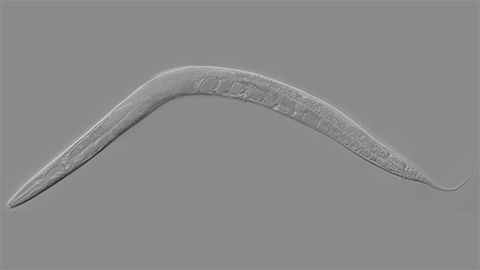
Researchers have found that the roundworm C. elegans can smell death, and it changes how the worms behave, reproduce and age.
A chance encounter with the lab
Payton Stevens never planned to become a pancreatic cancer researcher. A temporary job set him on a path from rural Kentucky to leading research on Wnt signaling and metastasis, where he now pairs discovery with mentorship and science advocacy.