
JLR: Thematic series highlights Alzheimer’s greatest genetic risk factor, ApoE
Alzheimer’s disease is the chief cause of dementia in adults in the U.S., accounting for up to 80 percent of all cases. While it is commonly known that age is the biggest risk factor of Alzheimer’s, the next major risk factor is less well known: a protein called apolipoprotein E, or ApoE.
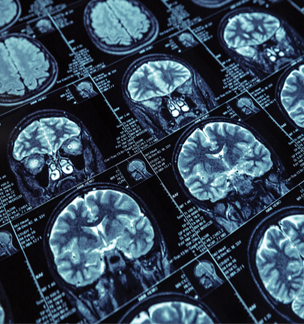
ApoE is the main lipid-carrier protein in the brain and has a role in the transport and metabolism of many lipid classes. This is important because the brain is a fatty, lipid-rich organ. ApoE can take three different forms, and the consequences of these differences can profoundly affect processes like lipid homeostasis and neurodegeneration. One specific form, ApoE4, increases one’s risk of developing Alzheimer’s by as much as eightfold. A recent thematic review series in the Journal of Lipid Research includes eight articles that explore the connections between brain lipids, ApoE and Alzheimer’s disease.
“Lipid abnormalities are closely associated with various neurodegenerative diseases,” said Ta-Yuan “T.Y.” Chang of Geisel School of Medicine at Dartmouth College. He and wife Catherine Chang have been researching cholesterol metabolism and its relationship to neurodegenerative diseases for more than four decades. As the coordinators of the series, they selected experts in their fields to review the current state of Alzheimer’s research. “This series of articles describes the recent advances in our knowledge of the roles of ApoE and various lipids in Alzheimer’s disease,” T.Y. Chang said.
The articles highlight the multifaceted nature of ApoE in both healthy brains and those with Alzheimer’s. “ApoE is a versatile protein and plays many roles,” T.Y. Chang said. One of its roles is clearing a specific peptide called amyloid beta, or Abeta, from the brain. “ApoE affects the clearance of Abeta peptides from the brain, and ApoE4 is much less capable of doing so than ApoE3,” he said. Without proper clearance, Abeta peptides can accumulate to form amyloid plaques, a hallmark of Alzheimer’s. In his article in the series, David Holtzman of Washington University delves into this connection.
ApoE is linked to Alzheimer’s by more than plaque accumulation. “ApoE4 itself adversely affects brain function in ways independent of Abeta,” T.Y. Chang said. Studies using young, healthy brains to study ApoE, lipids and inflammation in the brain are also critical, as many Alzheimer’s cases are detected only after symptoms are present. William Rebeck of Georgetown University summarizes this topic. Recent insights into the complex relationship between ApoE, Abeta and Alzheimer’s disease have come from improved animal models of Alzheimer’s, which historically has been hard to study due to key differences between the factors involved in humans and in mice. Mary Jo LaDu of the University of Illinois at Chicago writes how a novel transgenic mouse line that expresses human rather than mouse ApoE greatly increases the potential for preclinical drug testing in Alzheimer’s research.
The series also focuses on cholesterol as a key lipid class in the brain. “The brain contains 23 percent of the body’s total cholesterol, though it constitutes only 2 percent of the total body weight,” Catherine Chang said. Chang and Chang discuss the complex relationship between cholesterol homeostasis, ApoE and Alzheimer’s in their article.
Low-density lipoprotein receptors, or LDLRs, key players in cholesterol transport and metabolism, also are implicated in Alzheimer’s. Furthermore, ApoE is a ligand for a handful of different receptors in the brain, including several in the LDLR family. Articles by Joachim Herz of the University of Texas Southwestern Medical Center and Mitsuru Shinohara of the Mayo Clinic explore the specific roles some of the LDLR family proteins play in Alzheimer’s pathogenesis and highlight how conflicting reports on similar topics have led to debate within the field.
Alzheimer’s has no cure, despite efforts to understand the disease and develop effective treatments. Gary Landreth of Indiana University highlights one potential therapeutic target: nuclear receptors. These ligand-induced receptors are involved in various facets of Alzheimer’s progression. Landreth describes how agonists are being developed to increase the capacity of these receptors to mitigate disease progression.
Tobias Hartmann of the Universität des Saarlandes in Germany discusses the pitfalls and merits of multinutritional prevention approaches, specifically how they may affect ApoE transport of various lipid classes in the brain. This article discusses in detail disease-prevention approaches focused on intake of a variety of healthy fats, vitamins and proteins.
Collectively, these articles cover a few selective aspects of the connection between ApoE, healthy brain function and Alzheimer’s disease. Each article highlights specific areas of research that must continue for better understanding of Alzheimer’s and discusses discrepancies in the field to provide a snapshot of the research as it stands right now.
“Alzheimer’s disease is the sixth-leading cause of death in the U.S., and no cure is available at present,” T.Y. Chang said. “The research in this series has the potential to lead to new therapies to treat Alzheimer’s.”
Enjoy reading ASBMB Today?
Become a member to receive the print edition four times a year and the digital edition monthly.
Learn moreGet the latest from ASBMB Today
Enter your email address, and we’ll send you a weekly email with recent articles, interviews and more.
Latest in Science
Science highlights or most popular articles
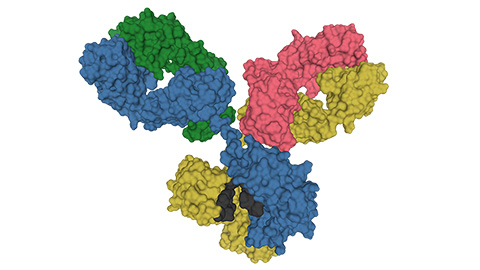
Glycosylation patterns across antibody isotypes distinguish tuberculosis states
Researchers at Taipei Medical University present the first site-specific glycosylation analysis of immunoglobulins in elderly tuberculosis patients.
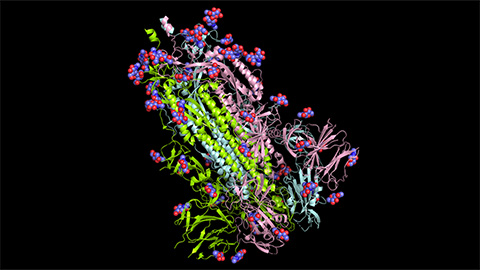
Blood glycome possibly predicts lifespan
Researchers at the University of Santiago de Compostela show that total serum N-glycome can predict mortality independent of traditional risk factors.
Building a better model for drug delivery across the blood–brain barrier
Industry and academic scientists collaborated to develop a rat with humanized iron-transport receptors, enabling research into iron homeostasis and drugs that cross the brain’s barrier.
Fat synthesis enzyme crucial for milk fat and newborn growth
Researchers found that a deficiency of the fatty acid synthesis enzyme stearoyl-CoA desaturase-1 reduced mammary gland function during lactation and caused low birth weight in newborns that were fed milk from enzyme-deficient glands.

Flipping lipids and slime molds
A dull first job nearly pushed JBC associate editor Todd Graham out of science. Then a slime mold project changed his path. Now, he studies membrane biology and reflects on discovery, persistence and mentoring through uncertainty.
How smelling death alters worm behavior
Researchers have found that the roundworm C. elegans can smell death, and it changes how the worms behave, reproduce and age.