
Opening the doors to the Invisible College
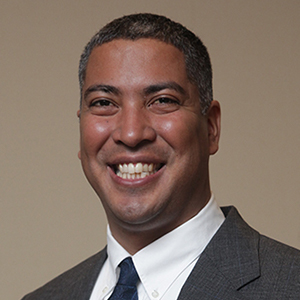
The Invisible College, a network of successful scientists working to help each other and mentor the next generation of investigators, has been in operation for centuries, serving to promulgate and advance the frontiers of science. Given the low numbers of underrepresented minorities in the biomedical research workforce, is it possible to usher a new generation of scientists into the Invisible College in order to accurately reflect the population demographics of the United States?
 I first encountered the Invisible College as a student, having been fortunate to find a mentor who encouraged me to pursue my doctoral degree in the biomedical sciences.
He spent an inordinate amount of time guiding me, always allowing me to make mistakes and helping me to learn from them. As the first individual in my entire extended family to attend college, I was perplexed upon receiving his generosity.
One day when my mentor and I were working on a manuscript, I looked up from my laptop and stared into his eyes. “Why are you helping me?” I asked.
The question took him by surprise, and he remained silent for a few moments. He leaned back in his chair and grumbled in his customary manner. Then a smile surfaced on his countenance as he stared back at me with equal intensity.
“When I was a student, I had similar circumstances,” he said “Someone mentored me, which laid the foundation for my success. Hence, I am part of a continuum of scientists helping the next generation. You are entering into this Invisible College, and you are charged to help others.”
I was floored by his response. This was the moment in our mentor-mentee relationship in which I felt that I was part of something bigger than myself. From that day forth, I stopped doubting whether I was capable or smart enough to earn a doctorate. Every academic challenge became an opportunity to persevere and share the lessons I learned with younger mentees. I unearthed the key to success in the biomedical sciences, which is to place one foot in front of the other and connect with as many members of the Invisible College as possible. I continued along the trajectory, mentoring others and catalyzing their entry into this perennial stream.
I am honored to serve as executive director for the National Research Mentoring Network, which has laid the infrastructure for thousands of mentees to gain access to the Invisible College by linking with its members, promoting diversity and continuing the advancement of biomedical research in the U.S. We achieve this through strategic synergies among five NRMN cores: the administrative core at Boston College, the mentor training core at the University of Wisconsin-Madison, the mentorship and networking core at the University of North Texas Health Science Center, the professional development core at the University of Minnesota, and the research resources and outreach core at the Morehouse School of Medicine.
The American Society for Biochemistry and Molecular Biology is an NRMN scientific society partner, which entails building awareness of NRMN and the National Institutes of Health's Diversity Program Consortium's offerings among ASBMB members, collaborating to deliver NRMN and DPC programs and workshops, and supporting advancement of diverse and inclusive biomedical researchers and scholars.
NRMN opens the doors of the Invisible College not for the select few but for all. Learn more and become a member at nrmnet.net.
Enjoy reading ASBMB Today?
Become a member to receive the print edition four times a year and the digital edition monthly.
Learn moreFeatured jobs
from the ASBMB career center
Get the latest from ASBMB Today
Enter your email address, and we’ll send you a weekly email with recent articles, interviews and more.
Latest in Careers
Careers highlights or most popular articles
Upcoming opportunities
🗨️ Shape the conversation at ASBMB 2027 in Boston! ASBMB is seeking proposals for sessions and events that will foster collaboration, highlight exciting science and support career development across the molecular life sciences.
Upcoming opportunities
Registration is now open for this summer's Art of Science Communication course! Build your science communication skills in this 8-week online program. ➡️ Registration deadline: May 6.

Upcoming opportunities
The American Society for Biochemistry and Molecular Biology is accepting applications for the Marion B. Sewer Distinguished Scholarship for Undergraduates. Apply by April 30, 2026.
Designing scientific careers, not just experiments
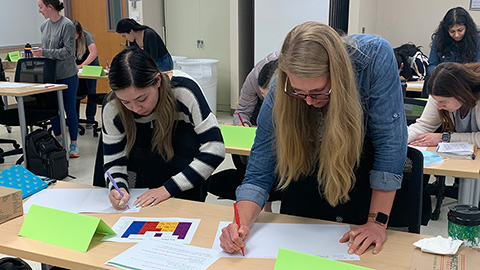
Universities are rethinking how they prepare scientists for careers beyond the bench. From myIDP to Vanderbilt’s Career Architect, programs help trainees clarify values, explore options and build intentional paths forward.
Upcoming opportunities
Dive into the world of lipids! Join the ASBMB Lipid Research Division Seminar Series on April 9, 12–1 p.m. ET to hear early-career researchers explore lipid metabolism and mitochondrial biology.
Upcoming opportunities
For the summer 2026 ASBMB Today essay series, we invite scientists working in industry to share first-person reflections on their work. Submit your essay or pitch by April 15, 2026.