
Frydman’s protein-folding work
defines ‘the forefront’
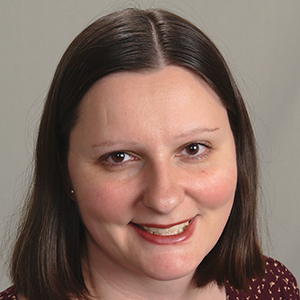
Judith Frydman, a professor at Stanford University, has won the 2017 American Society for Biochemistry and Molecular Biology–Merck Award. The award recognizes outstanding contributions to research in biochemistry and molecular biology.
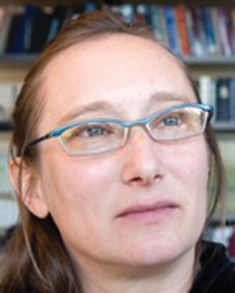
“It is such an honor to receive the Merck award. Our work highlights how an incredibly elaborate network of chaperones controls and monitors every aspect of the life of proteins in the cell, from birth to death. The sheer elegance and complexity of this machinery, and its relevance for therapies for many misfolding diseases, make for an exciting challenge in years to come.”
— JUDITH FRYDMAN
Frydman has made discoveries in chaperone-mediated protein folding and protein quality control. Her work uncovered basic principles of chaperone function during de novo protein synthesis as well as during quality control, when protein misfolding occurs. Correct folding of cellular proteins is a fundamental problem in biology and is essential to human health. “Her work encompasses an impressive string of path-breaking discoveries,” said Peter Walter of the University of California, San Francisco, who nominated Frydman for this award.
Frydman’s postdoctoral mentor, Ulrich Hartl at the Max Planck Institute of Biochemistry, recounts in his nomination letter how Frydman identified and characterized the eukaryotic cytosolic chaperonin complex TRiC/CCT system, including its structure and mechanism, in a series of publications from his laboratory. Frydman’s identification of TRiC as a eukaryotic chaperonin similar to, but distinct from, bacterial GroEL was a “tour-de-force and elucidated the fact that protein folding begins co-translationally in eukaryotic systems,” said the late Susan Lindquist of the Massachusetts Institute of Technology in her nomination letter of Frydman for this award. Hartl also said, “These studies are among the finest demonstrations of how one can dissect the mechanism of a complex macromolecular machine with a range of methods from biophysics, biochemistry and genetics.”
In her own laboratory at Stanford, Frydman is characterizing the process of protein quality control in eukaryotic cells. In a 2008 Nature paper, Frydman’s group showed that eukaryotic cells have distinct quality-control compartments that channel misfolded proteins to different cellular fates. This work relies on the sequestration of misfolded proteins into spatially and functionally distinct compartments, including a compartment that serves as a reservoir for subsequent protein repair/ubiquitination followed by proteasomal degradation and another compartment that sequesters terminally aggregated proteins.
Frydman’s work on protein homeostasis is also instrumental, as dysfunction of this machinery is associated with a growing number of human diseases. According to the late Lindquist, “her work holds important implications for a number of human diseases that result from misfolding of proteins, in particular neurodegenerative diseases.”
Frydman has approached her studies with an “enormous intellectual rigor and dedication to quality, and with a remarkable sense for biologically significant questions,” said Hartl. Walter further acknowledges that Frydman’s work encompasses “an innovative, comprehensive and most elegant integration of molecular chaperone function with cellular physiology and pathologies.” He adds that Frydman’s “work continues to define the forefront of a rapidly growing field, and her contributions mark significant milestones of our collective progress.”
Frydman has a Ph.D. in biochemistry from the University of Buenos Aires in Argentina. Frydman’s honors include the Distinguished Young Scholars Award from the W.M. Keck Foundation and the Merit Award from the National Institute of General Medical Sciences. She has organized and chaired a number of conferences on protein folding and homeostasis.
Frydman will receive her award during the 2017 ASBMB Annual Meeting in Chicago, where she will deliver an award lecture. The presentation will take place at 8:45 a.m. April 26 in room W183ab in McCormick Place.
Enjoy reading ASBMB Today?
Become a member to receive the print edition four times a year and the digital edition monthly.
Learn moreGet the latest from ASBMB Today
Enter your email address, and we’ll send you a weekly email with recent articles, interviews and more.
Latest in People
People highlights or most popular articles
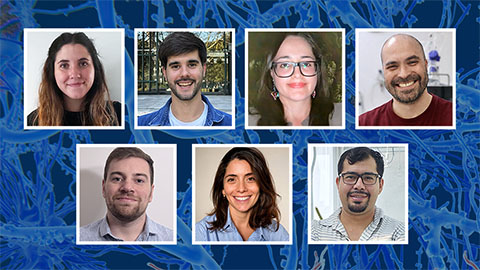
2026 PROLAB awardees announced
Each of the seven awardees will work in labs across Canada and the United States and will receive $7,000 to fund travel and living expenses.
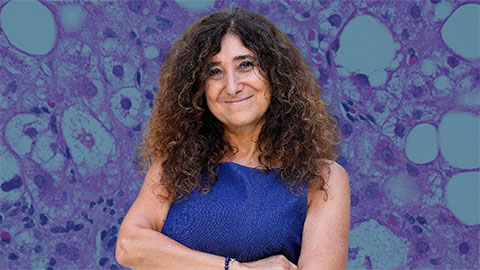
Uncovering the molecular roots of fatty liver disease
Physician–scientist Silvia Sookoian discusses her path from hepatitis C care to MASLD research, her use of multi-omics to study steatotic liver disease, and how lipid metabolism and genetics are reshaping understanding of MASH and liver health.
Kimble honored for lifetime achievement in genetics
She received the 2026 Thomas Hunt Morgan Medal and will be honored with a dedicated online profile and seminar.
Janetka named distinguished professor
Washington University awarded him the inaugural Carl Frieden Distinguished Professorship.
ASBMB members receive ASPET awards
The American Society for Pharmacology and Experimental Therapeutics awards Simone Brixius–Anderko, Paul Insel, Sudarshan Rajagopal, Emily Scott, Alan Smrcka and Jürgen Wess for their excellent research and mentoring work in pharmacology.
Kozul honored by Washington University
She received the 2025 Elliot L. Elson Education and Training Award.