
Richard J. Havel (1925 – 2016)

Richard “Dick” J. Havel, former director of the Cardiovascular Research Institute at the University of California, San Francisco, died in April in Greenbrae, Calif. He was 91.
Havel contributed to the emergence of the field of lipid metabolism both as an institute director and head of the Specialized Center for Research in Arteriosclerosis, a National Institutes of Health-supported group of laboratories that brought an array of technical approaches to lipid research.
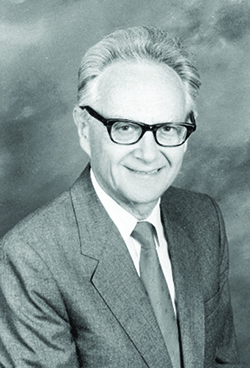 Richard J. Havel
Born in Seattle, Wash., Havel attended Reed College and went on to obtain his M.S. and M.D. from the University of Oregon Medical School in 1949. He completed his residency in medicine at Cornell University, serving as chief resident from 1952 to 1953. He then worked at the National Institutes of Health until 1956 before moving to UCSF to join the founding faculty of the Cardiovascular Research Institute.
While at the NIH, Havel developed the technique of quantitative ultracentrifugation, which remains a standard technique in the field to this day. It allowed the discrimination of clinical phenotypes and provided a basis for understanding lipid transport in health and disease. As a result of this work, Havel became the first to define the genetic disorder of lipoprotein lipase deficiency.
Havel succeeded Julius Comroe as director of the Cardiovascular Research Institute and later become interim director until his retirement in 1996. From 1971 until 1996, he also served as director of the NIH’s Specialized Center for Research in Arteriosclerosis, or SCOR.
Under his direction, SCOR investigators created a large body of integrated discovery on lipoprotein biology and its clinical significance, including the multistaged formation of triglyceride-rich lipoproteins, cholesterol efflux, structural and functional studies of HDL, and one of the first demonstrations that reducing the levels of atherogenic lipoproteins would result in diminution of the volume of arterial plaques.
Havel was elected to the National Academy of Sciences in 1983 and the Institute of Medicine in 1989. He won the Bristol Myers Squibb/Mead Johnson Award for Distinguished Achievement in Nutrition Research and a Distinguished Achievement Award from the American Heart Association Council on Arteriosclerosis. He served as editor-in-chief of the Journal of Lipid Research from 1972 to 1975 and as chair of its advisory board from 1982 to 1992.
Part of Havel’s legacy will be the careers of a large number of investigators who trained in his laboratory and with the SCOR group, who are now distinguished academicians in many countries. Havel leaves behind his wife, four children and three grandchildren.
This is a condensed version of an obituary that first appeared in the Journal of Lipid Research. It was written by John P. Kane and Mary J. Malloy at the University of California, San Francisco.
Enjoy reading ASBMB Today?
Become a member to receive the print edition four times a year and the digital edition monthly.
Learn moreGet the latest from ASBMB Today
Enter your email address, and we’ll send you a weekly email with recent articles, interviews and more.
Latest in People
People highlights or most popular articles
Uncovering the molecular roots of fatty liver disease
Physician–scientist Silvia Sookoian discusses her path from hepatitis C care to MASLD research, her use of multi-omics to study steatotic liver disease, and how lipid metabolism and genetics are reshaping understanding of MASH and liver health.
Kimble honored for lifetime achievement in genetics
She received the 2026 Thomas Hunt Morgan Medal and will be honored with a dedicated online profile and seminar.
Janetka named distinguished professor
Washington University awarded him the inaugural Carl Frieden Distinguished Professorship.
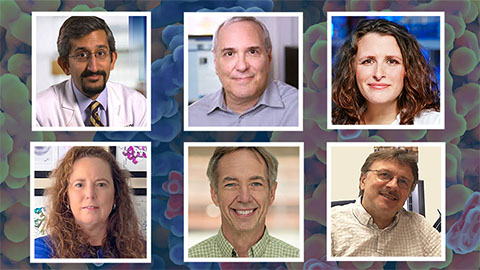
ASBMB members receive ASPET awards
The American Society for Pharmacology and Experimental Therapeutics awards Simone Brixius–Anderko, Paul Insel, Sudarshan Rajagopal, Emily Scott, Alan Smrcka and Jürgen Wess for their excellent research and mentoring work in pharmacology.
Kozul honored by Washington University
She received the 2025 Elliot L. Elson Education and Training Award.
de la Fuente honored for AI research
The award will support the development of an AI system called ApexMol, a 3D structure–informed, agentic large language model designed to create new biomolecules.