
A new test for diagnosing
Niemann–Pick disease

Niemann–Pick disease is a rare genetic disease with devastating effects. In one type of the disease, known as type C, defects in lysosomal storage within the cell lead to impaired neurological function. In infants, these symptoms can be especially difficult to recognize. They often include subtle changes in children’s development, such as failure to meet cognitive milestones or poor balance control.
Until recently, the first-line diagnostic test for NPC disease involved a skin biopsy and filipin staining, which is invasive, cumbersome and expensive. Patients with NPC often go up to five years without a diagnosis, drastically limiting the possibility of early interventions.
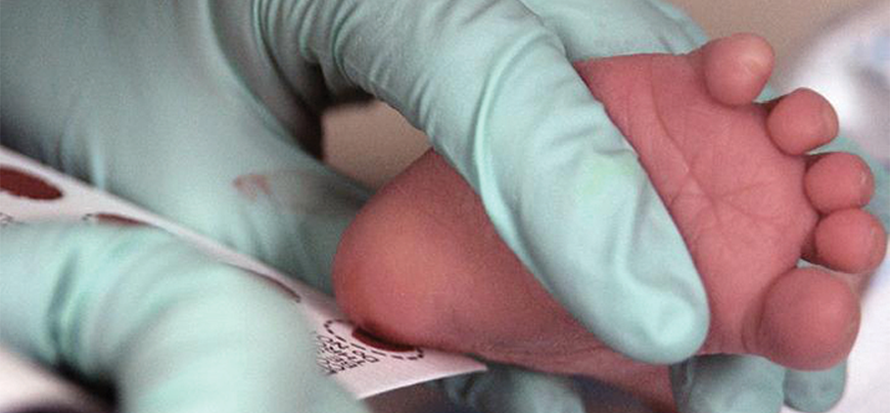 A new diagnostic test for Niemann–Pick disease can use previously collected dried blood spots from heel sticks. Courtesy of U.S. Air Force
In a paper recently published in the journal Science Translational Medicine, Daniel Ory of Washington University School of Medicine in St. Louis and colleagues lay the groundwork for a promising new diagnostic test for NPC. Importantly, the new noninvasive assay produces results within a day instead of months.
The team used mass spectrometry to analyze dried blood spots collected at various times after birth from patients known to have NPC. They found three bile acid biomarkers that could distinguish NPC patients from people without the disease.
The scientists then determined the structures of the bile acids. Ory and colleagues identified one bile acid as a trihydroxycholanic acid and another as its glycine conjugate.
Since the second bile acid helped the team distinguish NPC patients from non-NPC patients more consistently, the researchers decided to use it to develop a new diagnostic test.
Ory says the assay already is being used at Washington University in St. Louis, Mo., as a diagnostic test. He expects other centers to follow suit.
For its use in newborn screening, Ory says researchers will need to put the assay to the test in the undiagnosed newborn population to ensure its usefulness for that age group. Ory believes the testing process will take several years.
Although the U.S. Food and Drug Administration hasn’t yet approved treatments for NPC, a promising drug called cyclodextrin is moving rapidly through clinical trials. To be effective, treatment interventions will need to take place early in the disease process, which is something the new test could help accomplish. “We’re really trying to make an impact in this NPC community by being able to develop the therapies and being able to diagnose early,” says Ory. The approach “we’ve taken over the last 10 years, I feel like, it’s getting close to bearing fruit.”
Enjoy reading ASBMB Today?
Become a member to receive the print edition four times a year and the digital edition monthly.
Learn moreGet the latest from ASBMB Today
Enter your email address, and we’ll send you a weekly email with recent articles, interviews and more.
Latest in Science
Science highlights or most popular articles
Mitochondria shape kidney cell function
Researchers at the University of Washington, Seattle present the first quantitative comparison of mitochondrial interactomes between two epithelial cell types in the kidney.
Long-chain polyunsaturated fatty acids linked to postoperative delirium risk
Researchers show that altered lipid metabolism may contribute to postoperative delirium, a condition linked to increased risk for long-term cognitive decline. The study explores potential disease mechanisms, which have yet to be understood.
Glycosylation patterns across antibody isotypes distinguish tuberculosis states
Researchers at Taipei Medical University present the first site-specific glycosylation analysis of immunoglobulins in elderly tuberculosis patients.
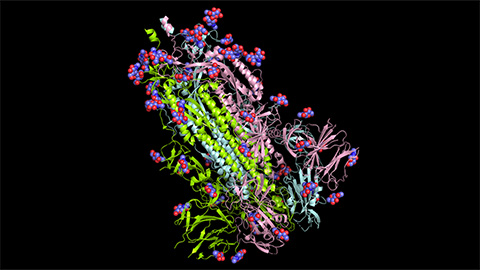
Blood glycome possibly predicts lifespan
Researchers at the University of Santiago de Compostela show that total serum N-glycome can predict mortality independent of traditional risk factors.
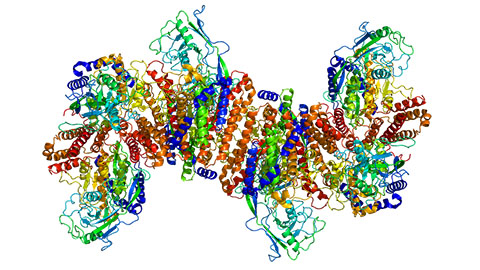
Building a better model for drug delivery across the blood–brain barrier
Industry and academic scientists collaborated to develop a rat with humanized iron-transport receptors, enabling research into iron homeostasis and drugs that cross the brain’s barrier.
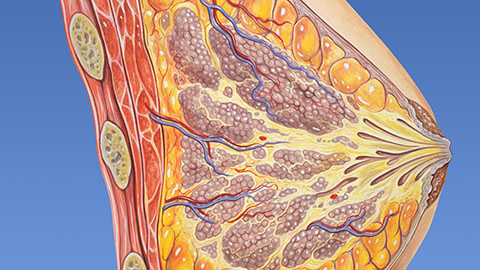
Fat synthesis enzyme crucial for milk fat and newborn growth
Researchers found that a deficiency of the fatty acid synthesis enzyme stearoyl-CoA desaturase-1 reduced mammary gland function during lactation and caused low birth weight in newborns that were fed milk from enzyme-deficient glands.