
From the journals: JBC

Biased agonism of an immune receptor. A profile of missense mutations. Cartilage affects tissue aging. Read about papers on these topics recently published in the Journal of Biological Chemistry.
Biased agonism of an immune receptor
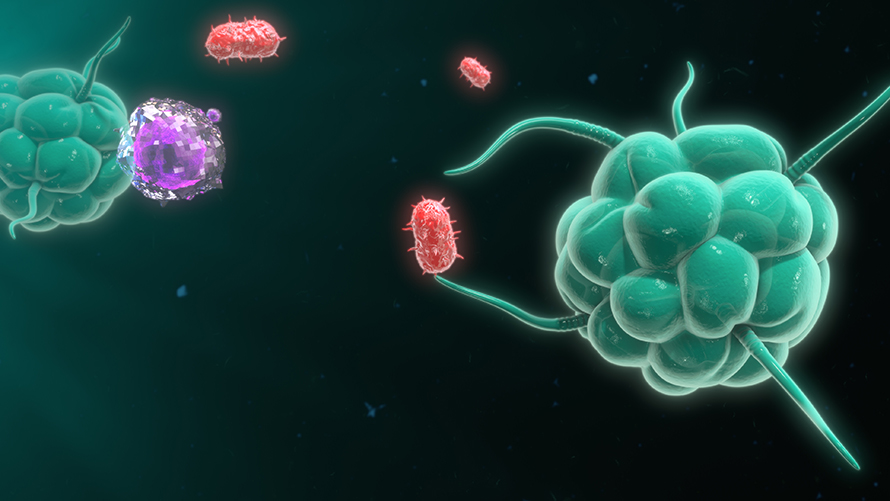
The complement system is a part of the immune system, activated by pathogens or by antibodies, that enhances phagocytic clearance of microbes and damaged cells. The complement receptor C3aR1 is a G protein-coupled receptor that has been extensively studied for its roles in allergic reactions such as anaphylaxis as well as inflammation; research has also shown that it plays a role in the breakdown of lipids upon binding the secretory signaling peptide TLQP-21. However, researchers do not yet understand how the physiological ligands C3a and TLQP-21 mechanistically mediate downstream signal transduction to promote immunity or lipolysis.
In a recent paper in the Journal of Biological Chemistry, Pedro Rodriguez, Lauren Laskowski and colleagues at the University of Minnesota and Medical College of Wisconsin demonstrated that C3a binding to the C3aR1 receptor inhibits production of the signaling amplifier cAMP, promotes receptor internalization via β-arrestin recruitment and increases calcium influx via transient receptor potential channels, or TRPCs. In a novel example of biased agonism, however, they showed that TLQP-21 binding preferentially leads to increased calcium signaling rather than cAMP inhibition, while the purported small molecule C3aR1 antagonist SB290157 actually functions as a full β-arrestin biased agonist, preventing further signaling and antagonizing C3a and TLQP-21 by greatly inducing receptor internalization.
As there is potential for C3aR1 to be a therapeutic target, these findings could have relevance in future discovery. Detailed analysis of the C3aR1 crystal structure, binding partners and downstream functionality will also be important for research into the connections between complement immunity and lipolysis.
A profile of missense mutations
Myosin binding protein-C, or MyBP-C, helps to regulate cardiac muscle contraction, and mutations in the cardiac variant, cMyBP-C, can cause hypertrophic cardiomyopathy, a thickening of the heart’s muscle tissues. Most mutations result in a truncated protein that is quickly degraded, but missense mutations in the core domains can be stable — although less functional and associated with disease — suggesting these domains have functional relevance in addition to the better-characterized N-terminal domain, which binds actin/myosin, and the C-terminal domain, necessary for incorporation into muscle filaments called A bands.
In a recent article in the Journal of Biological Chemistry, Amy Pearce, Saraswathi Ponnam and colleagues at King’s College London investigated the effects of four missense mutations (E542Q, G596R, N755K and R820Q) on core cMyBP-C domain stability, interaction with actin filaments, binding to myosin and subcellular localization. They found that each mutation resulted in a unique molecular phenotype; for example, E542Q and G596R mutant proteins had more affinity for myosin than actin compared to the nonmutant protein, while the N755K mutation affected myofibril structural organization and the R820Q mutation affected protein stability in eukaryotic cells.
The authors concluded that for each of these observed mutations, a valid explanation exists as to why the mutant cMyBP-C protein fails to function properly and results in heart disease. These findings highlight the need to evaluate each missense mutation individually so researchers can determine how they lead to hypertrophic cardiomyopathy.
Cartilage affects tissue aging
Aging is a complex natural process characterized by changes in the cardiovascular system, bones, joints and muscles. Phosphate homeostasis and metabolism are crucial to the aging process, and their disruption can lead to shortened lifespan and arteriosclerosis. However, researchers do not yet fully understand the molecular mechanisms that regulate these phenotypes in aging.
The transmembrane protein ectonucleotide pyrophosphatase/phosphodiesterase 1, or Enpp1, generates pyrophosphate, an intermediate in phosphate signaling, and clinicians have found an Enpp1 mutation in patients with bone and ligament calcification. In their new study in the Journal of Biological Chemistry, Takahiro Arima, Kazuki Sugimoto and colleagues at Kumamoto University in Japan genetically modified mice to lack the cartilage-specific Enpp1 gene. They showed that Enpp1 loss in cartilage tissue, namely chondrocytes, results in aging-related phenotypes, including calcium deposits in the kidneys and spinal ligaments, osteoporosis and shortened life span. They also found that these phenotypes could be rescued with decreased vitamin D intake, suggesting that elevated vitamin D levels might underlie some aging phenotypes.
The authors concluded that Enpp1 expression in cartilage tissue is required to regulate global phosphate metabolism, ectopic ossification and aging. The findings also implicate vitamin D levels as a risk factor for osteoporosis when Enpp1 signaling is disrupted.
Enjoy reading ASBMB Today?
Become a member to receive the print edition four times a year and the digital edition monthly.
Learn moreGet the latest from ASBMB Today
Enter your email address, and we’ll send you a weekly email with recent articles, interviews and more.
Latest in Science
Science highlights or most popular articles
How copper delivery fuels bacterial respiration
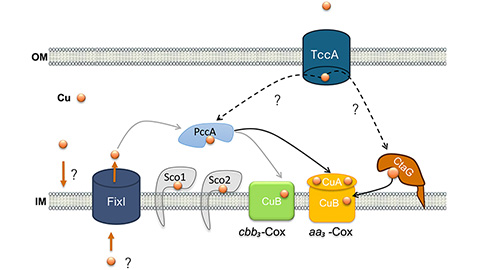
Researchers identify the roles of several proteins in copper homeostasis in the aerobic bacterium Caulobacter vibrioides.
Revealing the glycoproteome of a cancer subtype
Researchers mapped the glycoproteome of extrahepatic cholangiocarcinoma and compared it to intrahepatic tumors. Differences in sugar modifications and immune cell content suggest new biomarkers and guide development of targeted immunotherapies.
Uncovering the mechanisms of a glycosylation disorder
Mutations in OGT, an enzyme that adds sugars to proteins, cause a rare neurological disorder. Using proteomics, researchers reveal how OGT interactions with TET proteins may trigger epigenetic changes and early neural defects.
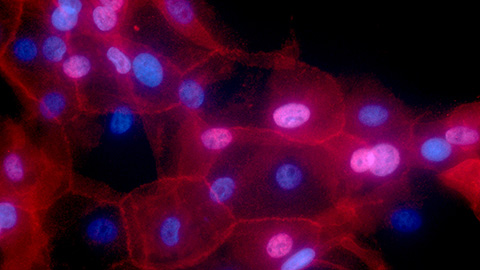
Heat shock proteins as a promising breast cancer therapeutic
Researchers unveiled isoform-specific targets on heat shock protein 90 which may be beneficial in therapeutic development.

Optimized proteomic analysis of preserved biological tissue samples
Researchers have developed an optimized workflow for analyzing formalin-fixed paraffin-embedded tissue. This workflow provides an enhanced collection of unique proteins and phosphorylation sites for more detailed analysis of biological samples.
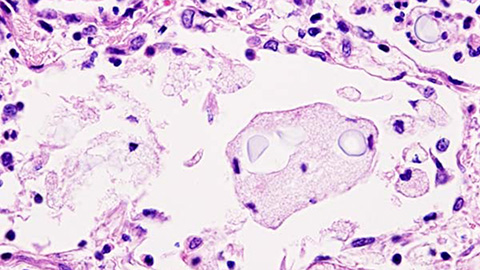
Blood proteomics reveals fungal infection signatures for faster diagnosis
Whole-blood proteomics identifies more than 3,000 host and 160 fungal proteins during cryptococcal infection, offering potential biomarkers for faster diagnosis and improved monitoring without invasive spinal taps.