
It’s what’s on the outside that counts
In the same way that how people dress can help us identify or recognize them, what cells wear on the outside allows our immune response to recognize them as cancerous or not.
To develop cancer therapies, Victor H. Engelhard, a professor of microbiology, immunology and cancer biology at the University of Virginia School of Medicine, is working toward understanding what cancer cell antigens are recognized naturally by T cells.
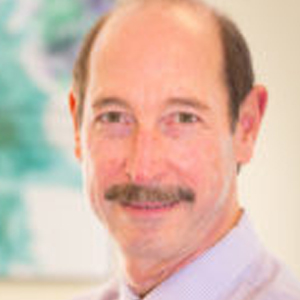
Engelhard was one of Rice University’s first graduates in biochemistry, a brand-new major in the 1970s. Although he started off as an undergraduate interested in computer science, when he “hit a wall with mathematics,” his interest in chemistry ultimately won out. The head of the biochemistry department at Rice encouraged him to attend the University of Illinois for graduate school, where he focused on adenylate cyclase. He then completed a postdoctoral fellowship focused on major histocompatibility complex, or MHC, molecules at Harvard. These molecules display proteolyzed bits of intracellular proteins on the surface of cells for T-cell recognition, and they have been central to Engelhard’s research ever since his postdoc.
Engelhard’s journey into and through scientific research is “not so much focused on the ‘ah-ha’ moments,” he said, but instead is about “always looking out for opportunities and taking the interesting ones.”
And it’s not enough to identify intriguing questions and opportunities, he said. “My view of science is to follow what’s interesting, but also you have to look for people you can work with who bring a distinct perspective.”
Diversity of expertise and experience promotes a culture of collaborators who learn from each other and push projects in new and exciting ways, he said.
With this mindset, Engelhard has established essential collaborations that have resulted in the development of technology that allows researchers to sift through complex peptide mixtures using mass spectrometry and has demonstrated that there are T cells in melanoma patients that can recognize melanoma cells.
Identifying unique cancer cell antigens
Cells can display hundreds of thousands of different antigens produced from breaking down proteins inside the cell, about 8-15 amino acids long, that are presented by MHC molecules. Because cancer cells frequently dysregulate kinases and phosphatases, specific post-translational modifications like phosphorylation could provide a marker for our immune system to recognize a tumor, which could lead to new therapeutics such as a vaccine or recombinantly expressed T cells. Recently, Victor Engelhard’s team has found that some antigens displayed on cancer cells are phosphorylated, but the same antigens in noncancerous cells are not as commonly phosphorylated.
Given the breakthrough of being able to identify cancer-specific antigens, the biggest challenges include understanding which are most important for tumor survival and understanding how these phosphorylations are utilized by cancerous cells. Further complications arise from the fact that although these modifications are more present in tumors, they also may be present in lower concentrations in healthy cells, which could result in immune-related adverse effects. Engelhard and collaborators hope to work toward overcoming these challenges to achieve the goal of developing PTM-based cancer therapies.
Engelhard's talk will take place on Monday, April 4. Click here for more information.
Enjoy reading ASBMB Today?
Become a member to receive the print edition four times a year and the digital edition monthly.
Learn moreGet the latest from ASBMB Today
Enter your email address, and we’ll send you a weekly email with recent articles, interviews and more.
Latest in People
People highlights or most popular articles
ASBMB members receive ASPET awards
The American Society for Pharmacology and Experimental Therapeutics awards Simone Brixius–Anderko, Paul Insel, Sudarshan Rajagopal, Emily Scott, Alan Smrcka and Jürgen Wess for their excellent research and mentoring work in pharmacology.
Kozul honored by Washington University
She received the 2025 Elliot L. Elson Education and Training Award.
de la Fuente honored for AI research
The award will support the development of an AI system called ApexMol, a 3D structure–informed, agentic large language model designed to create new biomolecules.
In memoriam: Peter Roepstorff
He was a leading researcher in biological mass spectrometry, mapped protein function in living organisms and was an ASBMB member for 19 years.
Flipping lipids and slime molds
A dull first job nearly pushed JBC associate editor Todd Graham out of science. Then a slime mold project changed his path. Now, he studies membrane biology and reflects on discovery, persistence and mentoring through uncertainty.
ASBMB members receive RNA Society awards
The RNA Society awards Brenda Bass, Can Cenik and Karin Musier–Forsyth for their achievements in RNA research and innovation. Winners will be recognized at the closing awards ceremony of the RNA 2026 annual meeting.